
Description:
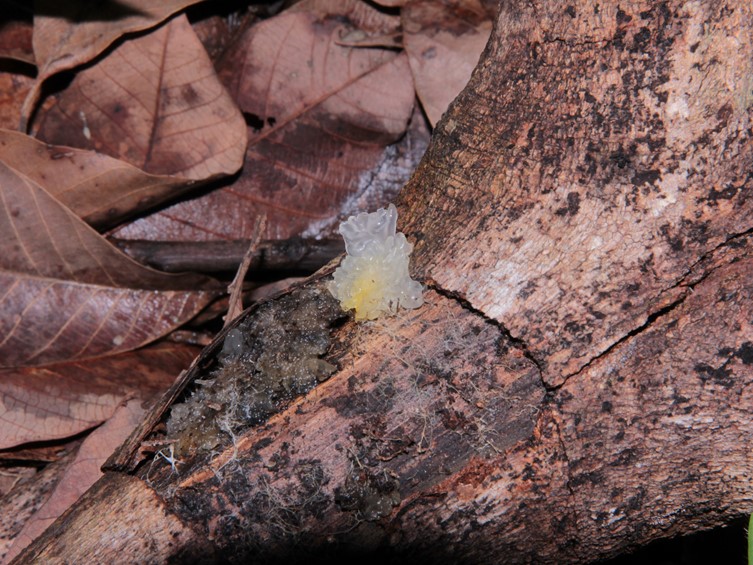
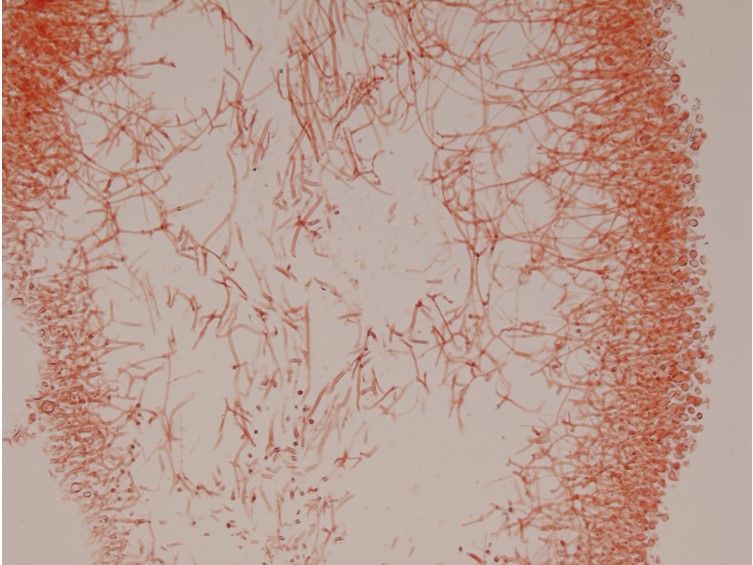
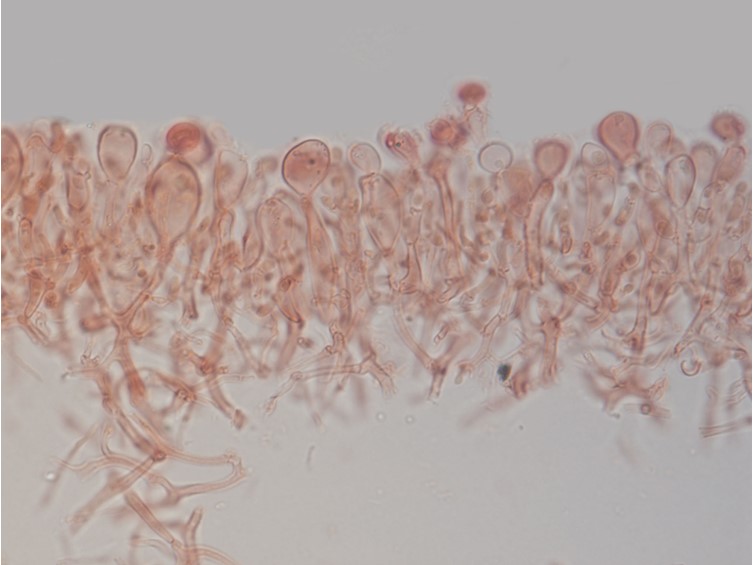
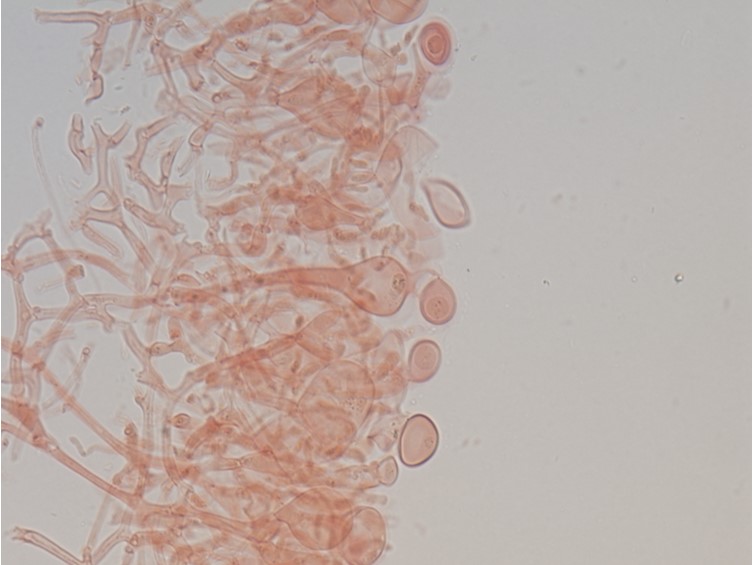
Basidiocarp foliose, lobed or forked, or with margins incrised or crenate or sometimes entire, fragiled undulate firm-gelatinous, white, up to 37 mm, diam and 19 mm high, dry becoming pale whitish yellow; lubes usually very thin. probasidia initials typically clavate, mostly proliferation from swollen and short hyphae, sometimes through the basidial clamps; mature basidia predominantly subglobose to ellipsoid, some globose or narrow clavate, 11–17.5 × 8–10 µm, longitudinally, obliquely, or diagonally cruciate-septate, mostly 4-, occasionally 2- spored; sterigma up to 45 × 2 µm, apically swollen up to 4–5 µm. Basidiospores broadly ellipsoid to ellipsoid, 7–8 × 5–6 µm, smooth, hyaline, germinating by budding, repetition or sometimes germ tubes. Conidia absent. Vesicles absent. Swollen cells; in the inner part of basidiocarps, shape variable, mostly subglobose to oval, 8–14 × 6.25–14 µm; the terminally and subterminally swollen cells of commercial basidiocarps on the sterile surface close to the substrate existing, terminal cells subglobose to oval, occasionally pyriform with short stalks, 32.5–50 × 16–35 µm, stalks up to 4–6 µm long; subterminal cells, mostly citriform, tapering both sides, occasionally oval to capitate, 35–52 × 16–27.5 µm, stalks up to 15 µm long. Hyphidia: absent. Haustoria abundant in basal parts close to the substrate, rarely in mature hymenium, clamped, haustorial hyphae often branched.
Reference:
Chen CJ. Phylogeny of Tremella and cultiviation of T. fuciformis in Taiwan.
Species |
Strain |
Compound |
Pubchem CID |
Biological activity |
Reference |
|---|
|
Strain |
|---|