
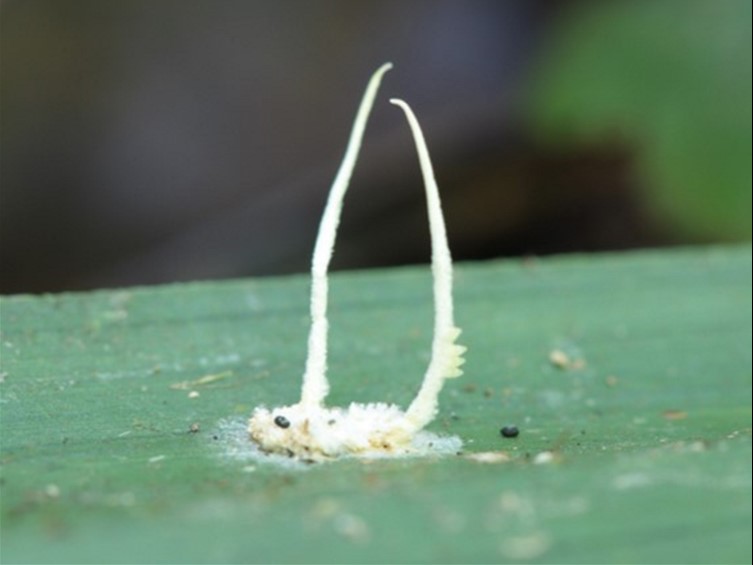
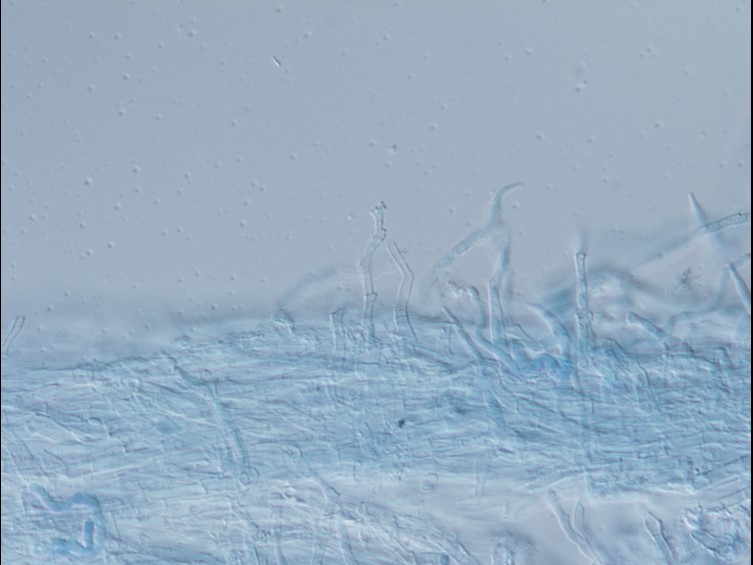
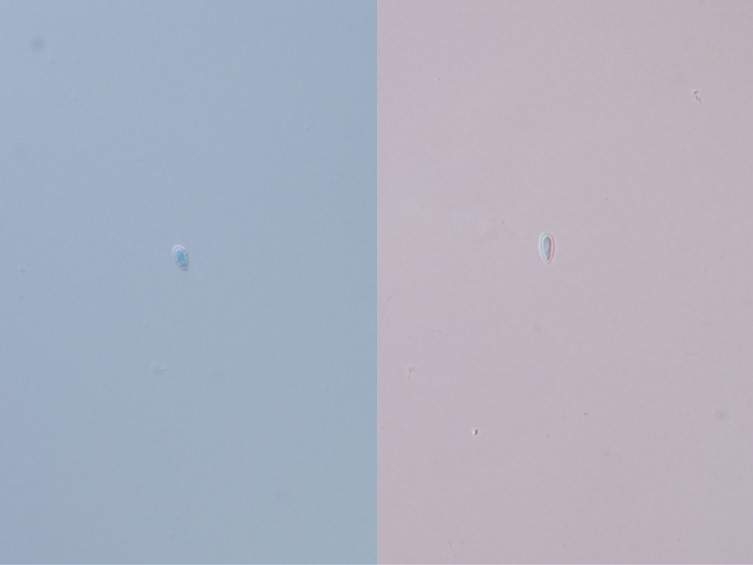
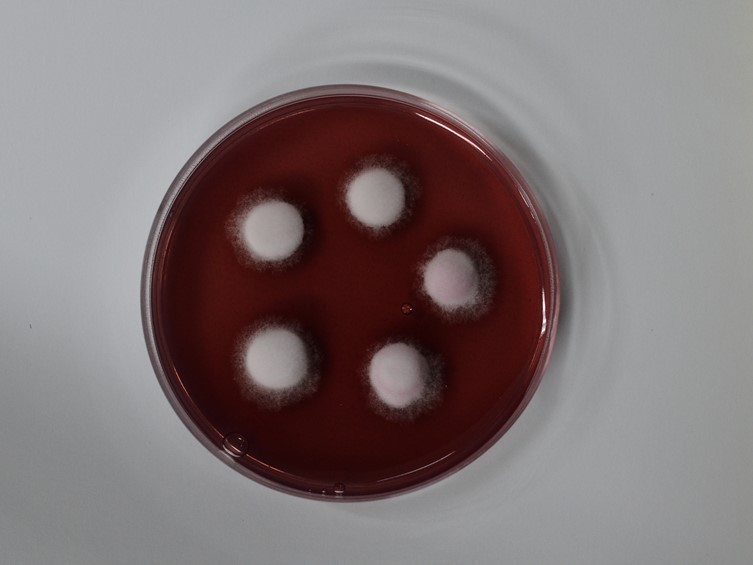
Holotype:
THAILAND, Nakhon Nayok Province, Khao Yai National Park, 7 Jun. 2012, K. Tasanathai, S. Mongkolsamrit, A. Khonsanit, W. Noisripoom, P. Srikitikulchai, holotype BBH 32477, ex-type living culture BCC 53567.
Habitat:
Underside of a dicotyledonous leaf
Host:
Ophiocordyceps sp. on cockroach
Description:
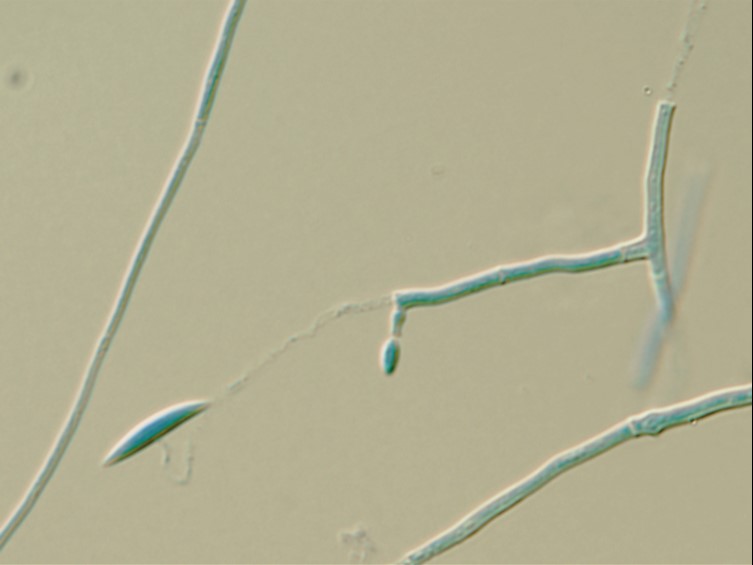
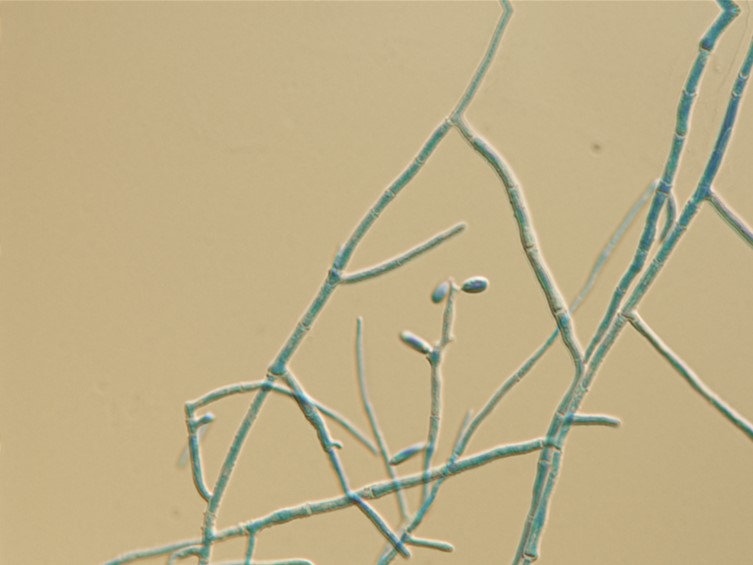
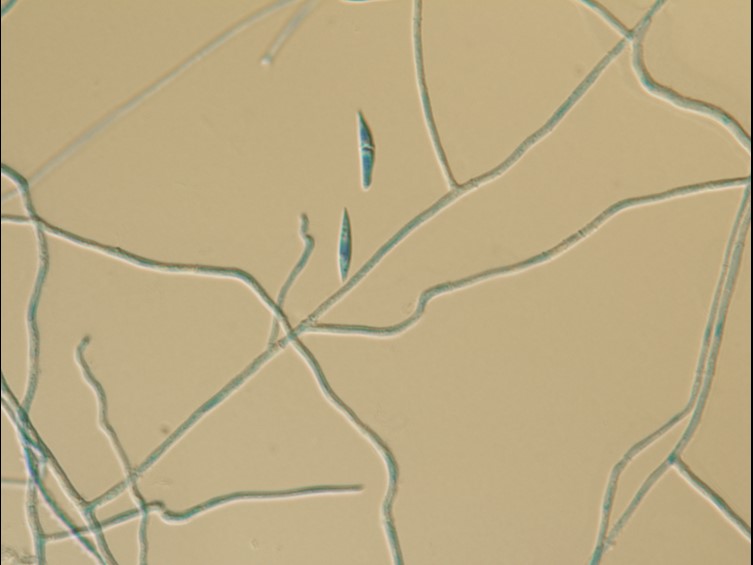
White to cream and cottony mycelium forming on the stromata of Ophiocordyceps sp. on cockroach, flattened, scattered. Conidiophores mono- or synnematous, conidiogenous cells arising from undifferentiated
cylindrical to linear cells, 12–90 × 1.5–3 µm bearing a rather irregular, geniculate rachis, scattered. Two
types of conidia: Type I (microconidia), produced on specimen and on OA, forming singly on denticles, hyaline, smooth walled, one-celled, ovoid to ellipsoid, 5–8 × 2–3 µm; Type II (macroconidia), produced on PDA, hyaline, fusoid, occasionally
septate, 5–12 × 1–2 µm.
Culture characteristics:
Colonies on PDA attaining a diam of 12–15 mm in 20 d at 25 °C, cottony with high mycelium density, white, moderate
purplish red to dark purplish pink pigment diffusing in the medium. Sporulation observed after
14 d. Conidiogenous cells on PDA arising from aerial hyphae, solitary, producing both microconidia and macroconidia. Macroconidia on PDA hyaline, fusiform, 5–12 × 1–2 µm, occasionally septate.
Reference:
N. Kobmoo, K. Tasanathai, J.P.M. Araújo, et al. (2023). New mycoparasitic species in the genera Niveomyces and Pseudoniveomyces gen. nov. (Hypocreales: Cordycipitaceae), with sporothrix-like asexual morphs, from Thailand . FUSE12: 91–110.
DOI: http://doi.org/10.3114/fuse.2023.12.07Species |
Strain |
Compound |
Pubchem CID |
Biological activity |
Reference |
|---|
|
Strain |
|---|
| BCC 53567 |
| BCC 53568 |