
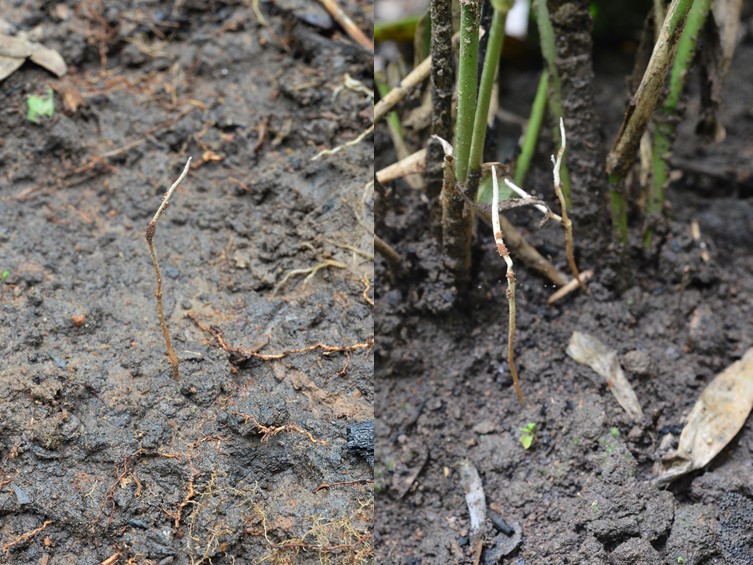
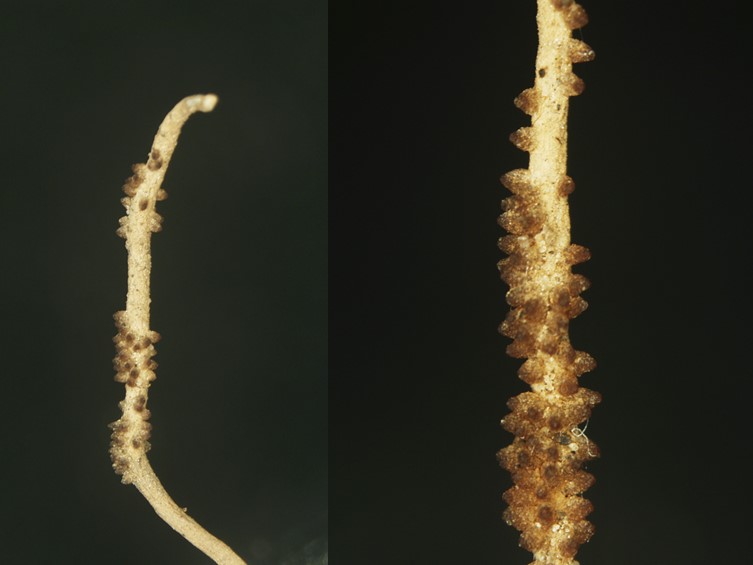
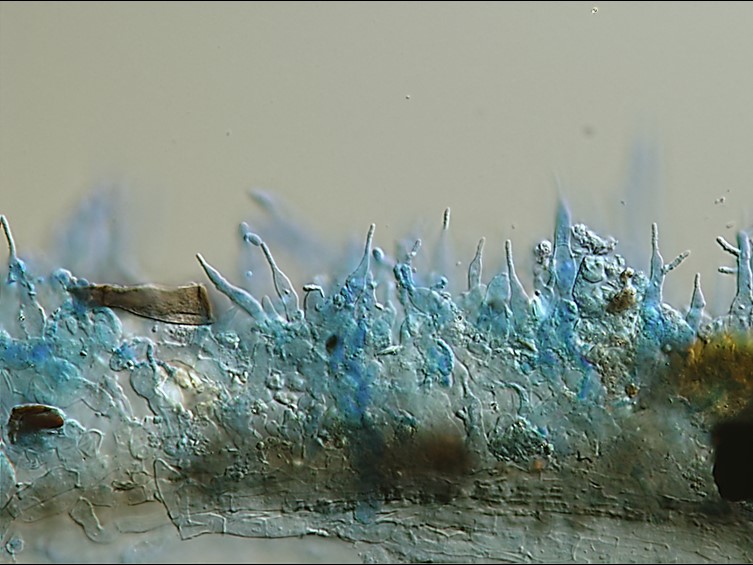
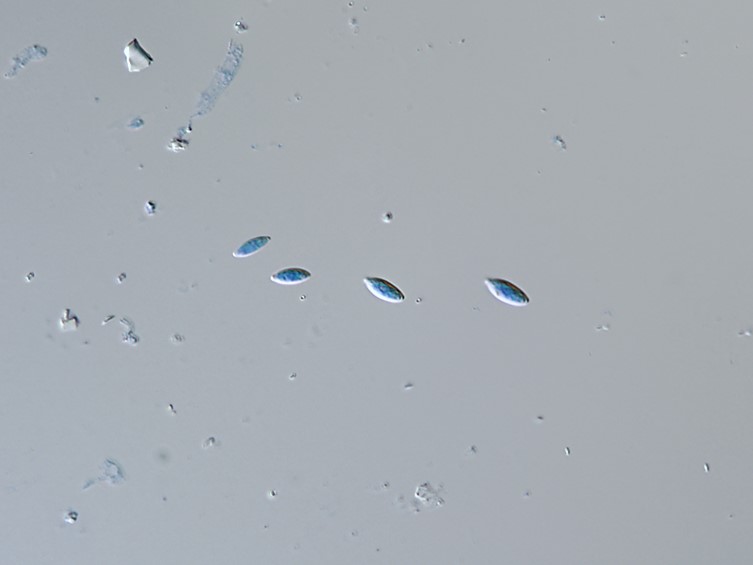
Holotype:
THAILAND, Chiang Mai Province, Ban San Pa Lan Community Forest, 25 Aug. 2020, K. Tasanathai, D.Thanakitpipattana, A. Khonsanit, S. Sommai, U. Pinruan, P. Khamsuntorn, holotype BBH 49129, ex-type living culture BCC 93036.
Habitat:
Buried in soil.
Host:
On Termites.
Description:
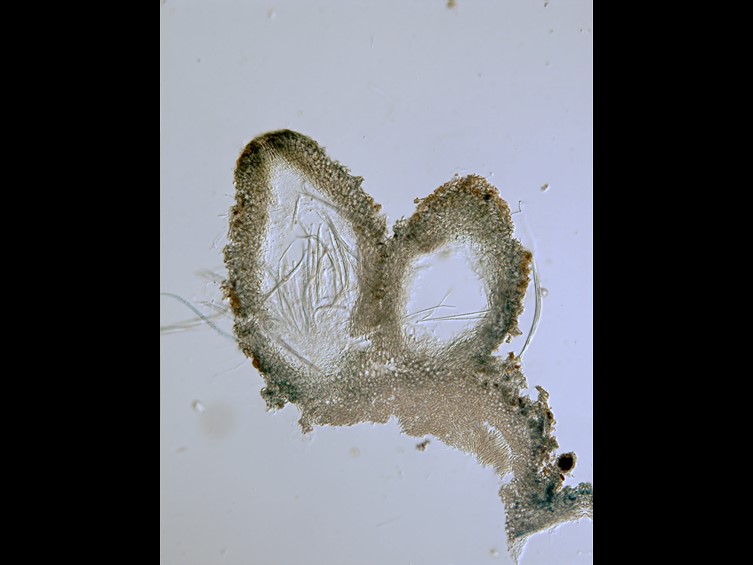
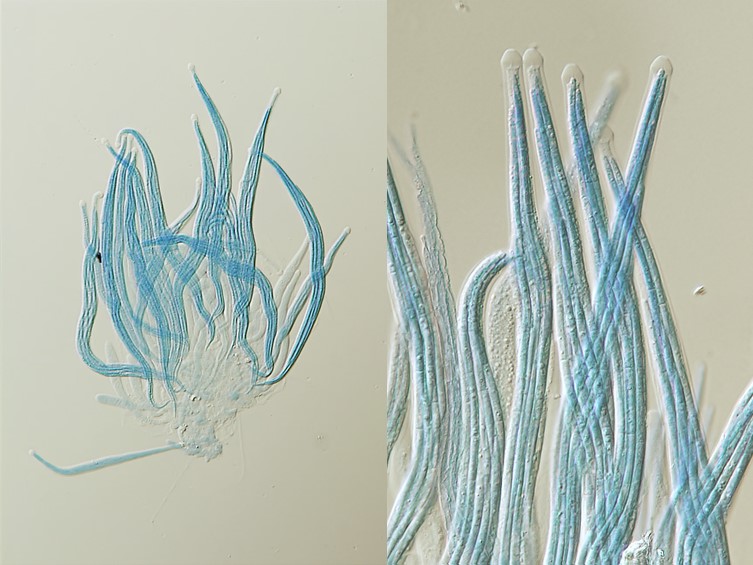
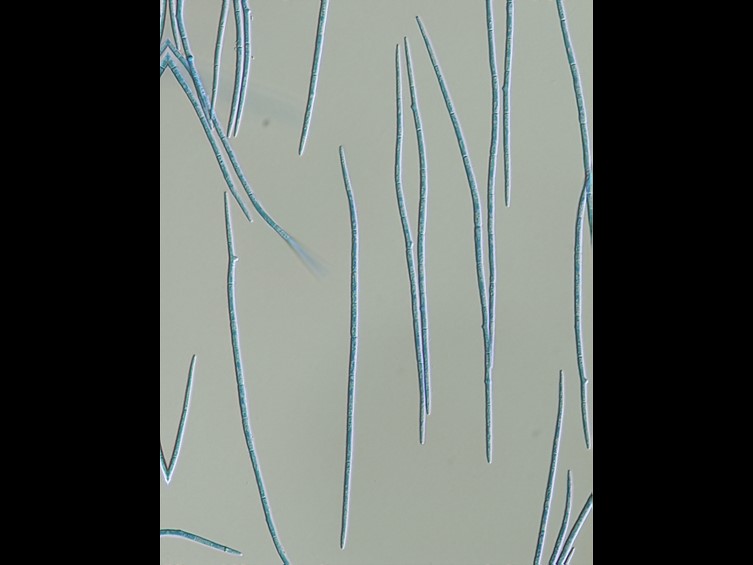
Stromata solitary, simple, cylindrical, up to 11 cm long, 1–2 mm wide, brown, ca. 3–5 cm deep buried in the soil. The fungal stroma emerging from the segment between the prothorax and mesothorax of one of the termite pairs. Fertile part distinctly subterminal with asexual morph at apex, ca. 5–10 mm long, 2 mm wide. Asexual morph (Hirsutella-like) produced ca. 1.5–2 cm at the terminal part of the stroma, white to cream.  Conidiogenous cells arising from the hyphae along the terminal part of the stroma, 6–15 × 2–5 μm. Conidia hyaline, fusiform, 5–7 × 2–3 μm. Sexual morph: Perithecia superficial, ovoid, covering middle part of stroma, 330–460 × 200–320 μm. Asci 8-spored, cylindrical, 140–296 × 6–10 μm with ascus caps, 4.5–6 × 4–6 μm. Ascospores whole, filiform, 154–215 × 2–3 μm, multi-septate.
Culture characteristics:
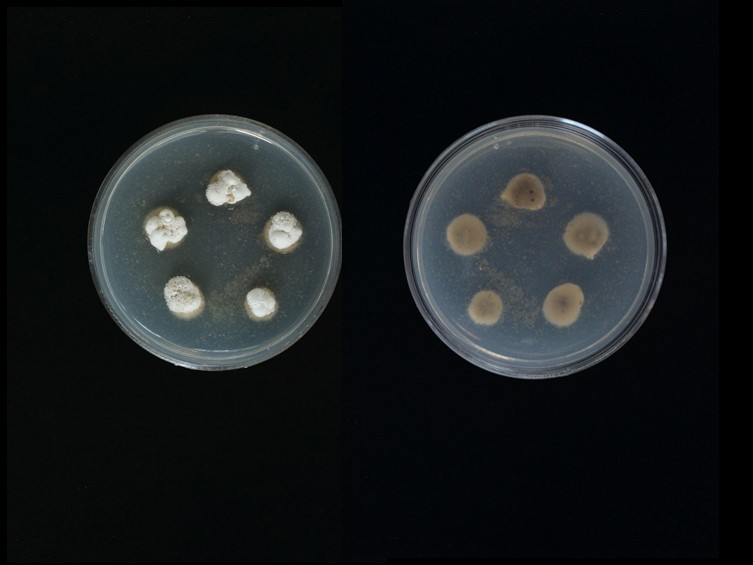
Colonies on PDA attaining a diam of 8.5 mm in 20 d at 25 °C, yellowish white to yellowish grey. Conidia and reproductive structures are not formed.
Reference:
Tasanathai K, Khonsanit A, Noisripoom W, et al. (2022). Hidden species behind Ophiocordyceps (Ophiocordycipitaceae, Hypocreales) on termites: four new species from Thailand. Mycological Progress 21: 86.
DOI: https://doi.org/10.1007/s11557-022-01837-6Species |
Strain |
Compound |
Pubchem CID |
Biological activity |
Reference |
|---|
|
Strain |
MZ676746 | MZ676747 |
|---|---|---|
| BCC 93035 | - | MZ675426 |
| BCC 93036 | MZ675425 | - |