
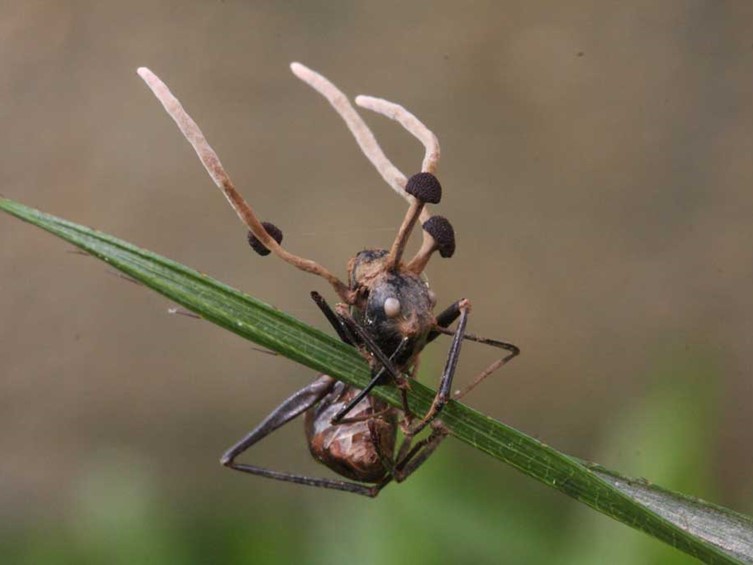
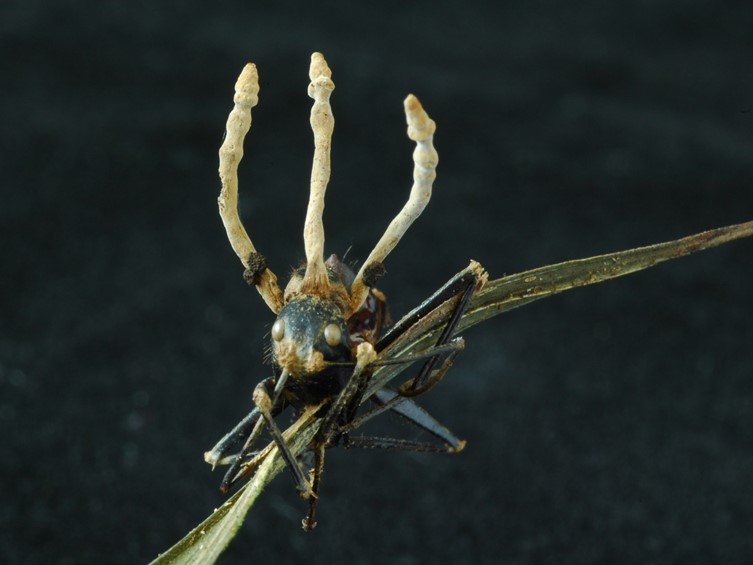
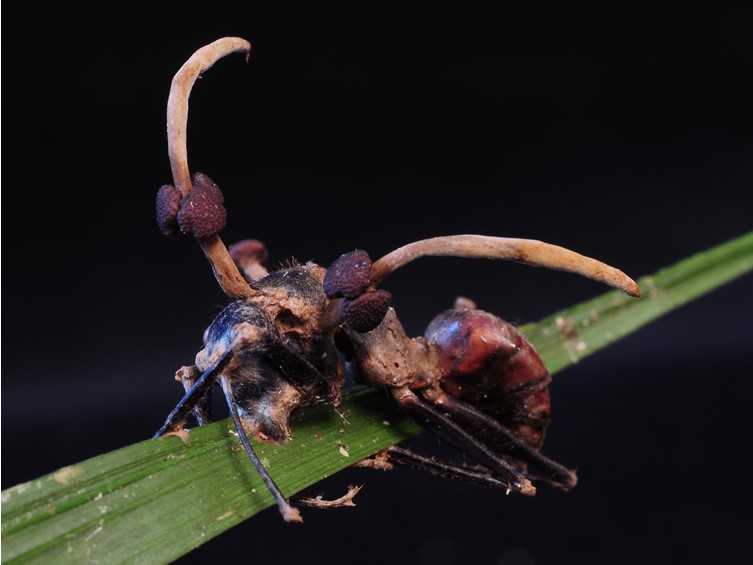
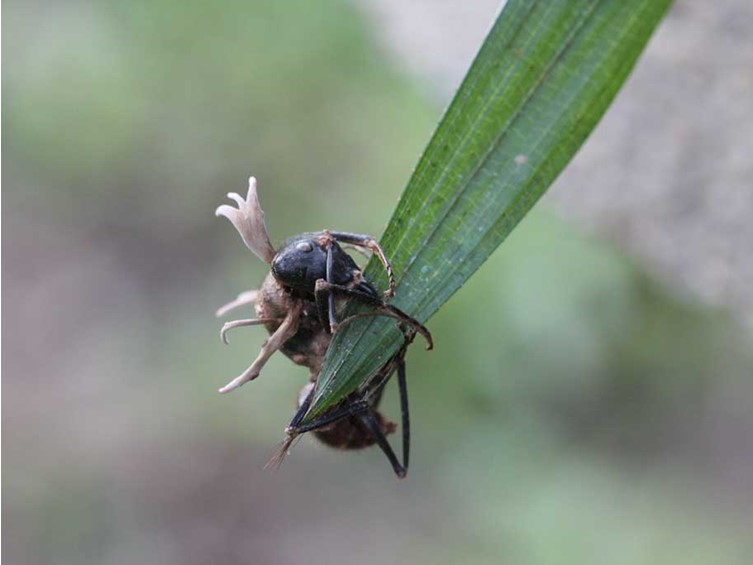
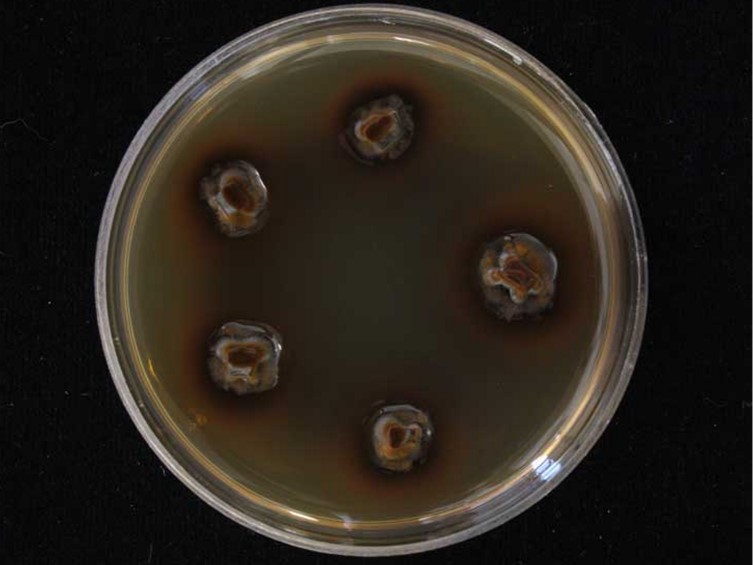
Holotype:
THAILAND, Narathiwat Province, Hala Bala Wildlife Sanctuary, 26 Sep. 2006, K.Tasanathai, S. Mongkolsamrit, B.Thongnuch, R. Ridkaew, P. Srikitikulchai, C. Chuaseeharonnachai, holotype BBH 18678, ex-type living culture BCC 21491.
Habitat:
On leaf of palm (Daemonorob kunstleri).
Host:
Camponotus gigas.
Description:
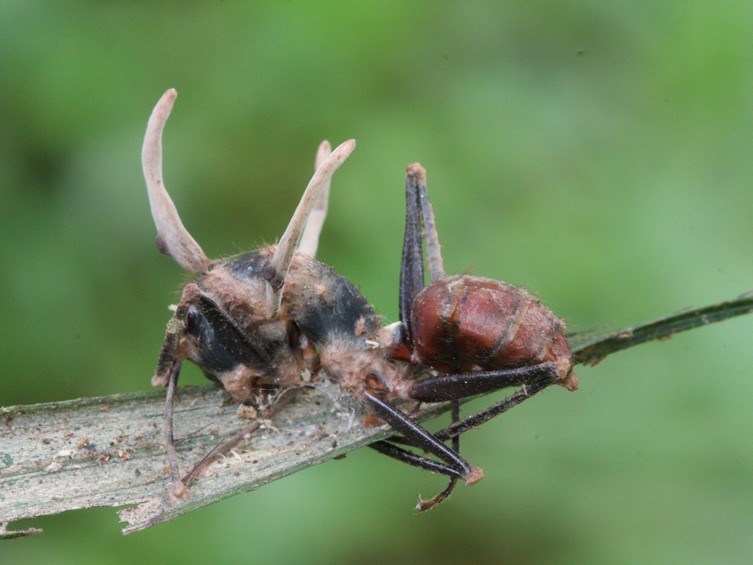
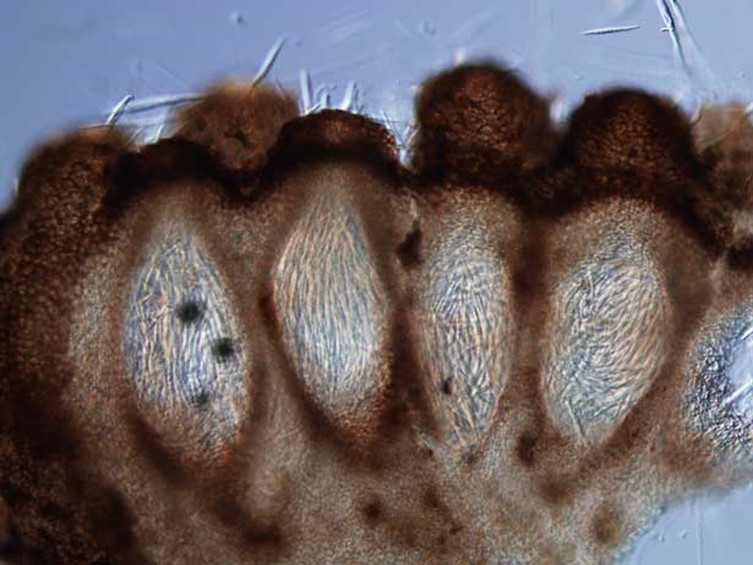
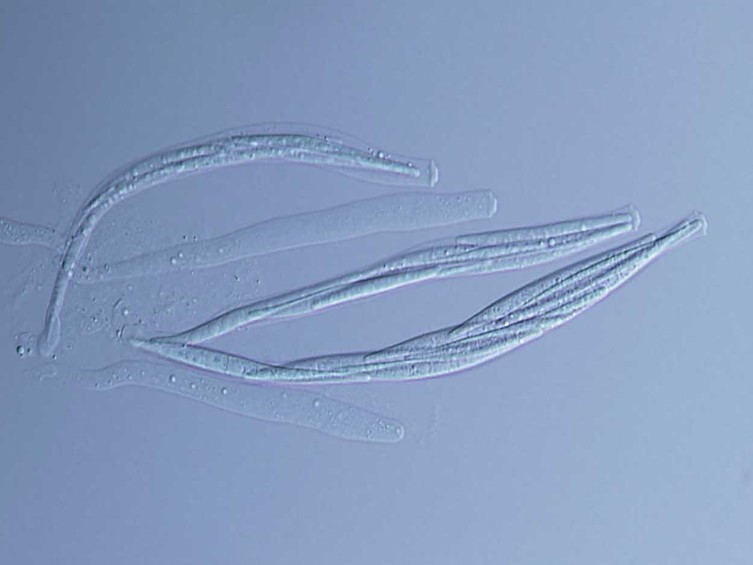
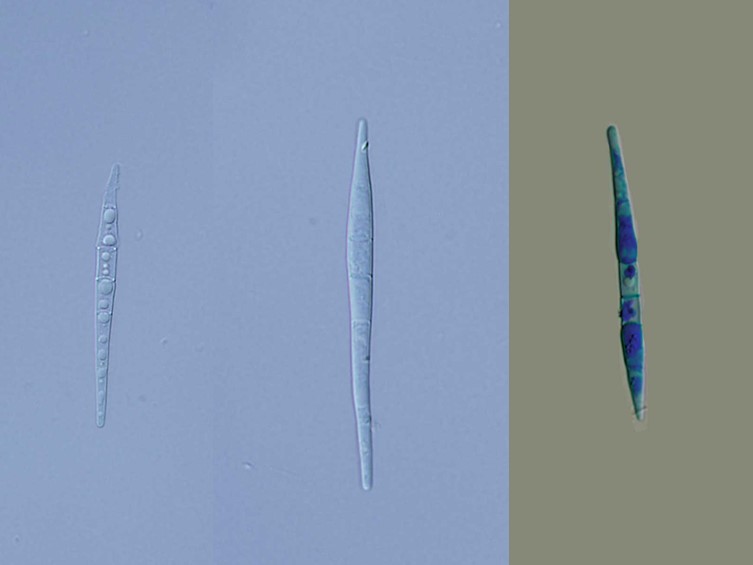
Specimens were found fixed on the tips or the ends of palm fronds of Daemonorob kunstleri. Three stromata are usually present. A single stroma arises from the back of the head, 8-9 mm long. The other two stromata emerge from the top joints of the left and right forelegs where these join the thorax, the right stroma is ca 6.5-17 mm long and the left stroma ca 7-18 mm long. They are sturdy blackish brown. The perithecia are closely packed and appear to be covered by a blackish-brown wall, 1.5-2 × 1.5-2 mm. They are produced in a pulvinate black stromatal cushion that may develop at various places along the stromata but preferably on the upper two-thirds of the stroma. Several perithecial cushionsmay develop. Below the perithecial plate near the base of the stroma are coarse golden brown hairs. Above the perithecial plate is a loose hymenium with occasional phialides visible. Perithecia fusoid-ellipsoid with rounded ostioles, 350-420 × 180-210 mm, with ostioles slightly protruding on the surface of the plate. Asci cylindric, eight-spored, 150-200 × 7-10 mm. Ascospores cylindric with tapering ends, 60-75 × 3-5 mm, multi-septate, remaining whole after discharge.
Reference:
Luangsa-ard JJ, Ridkaew R, Tasanathai K, et al. (2011). Ophiocordyceps halabalaensis: a new species of Ophiocordyceps pathogenic to Camponotus gigas in Hala Bala Wildlife Sanctuary, Southern Thailand. Fungal Biology 115: 608–614.
DOI: https://doi.org/10.1016/j.funbio.2011.03.002Species |
Strain |
Compound |
Pubchem CID |
Biological activity |
Reference |
|---|
|
Strain |
ITS | TEF1 |
|---|---|---|
| MY 1308 | GU723758 | GU797109 |
| MY 5151 | GU723763 | GU797110 |