
Habitat:
Underside of dicotyledonous leaves, twig of trees.
Host:
Scale insect nymphs (Hemiptera).
Description:
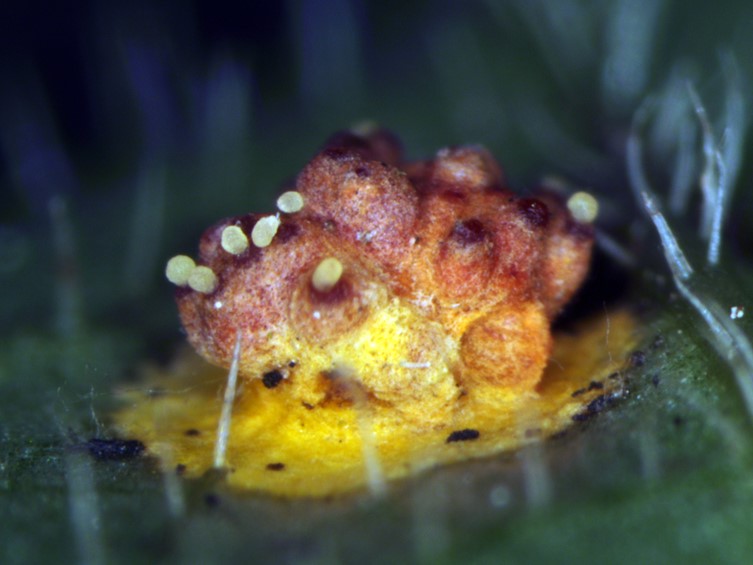 Sexual morph: stromata hemispherical (conicopulvinate to pulvinate in immature specimens), moderately hard, consisting of densely interwoven hyphae, up to 4 mm diam, ca 1.5-2 mm high, orange to brownish orange.
 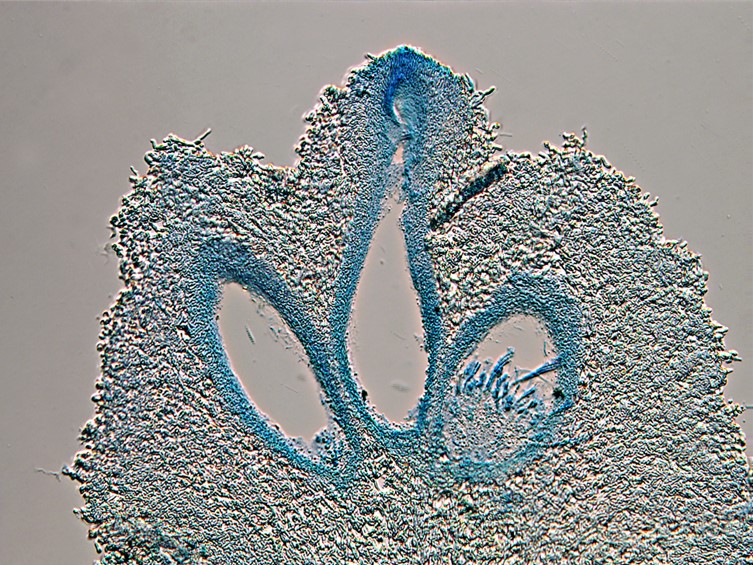 Perithecia scattered, slightly projecting, ostioles red brown, flask-shaped, ca 400 µm deep, 125-150 µm diam.
 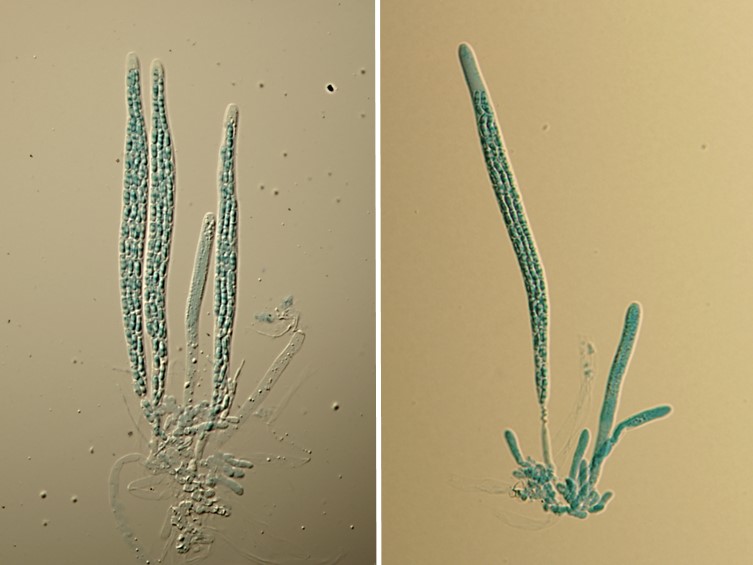 Asci cylindrical 160-250 × 7.5-8.5 µm.
 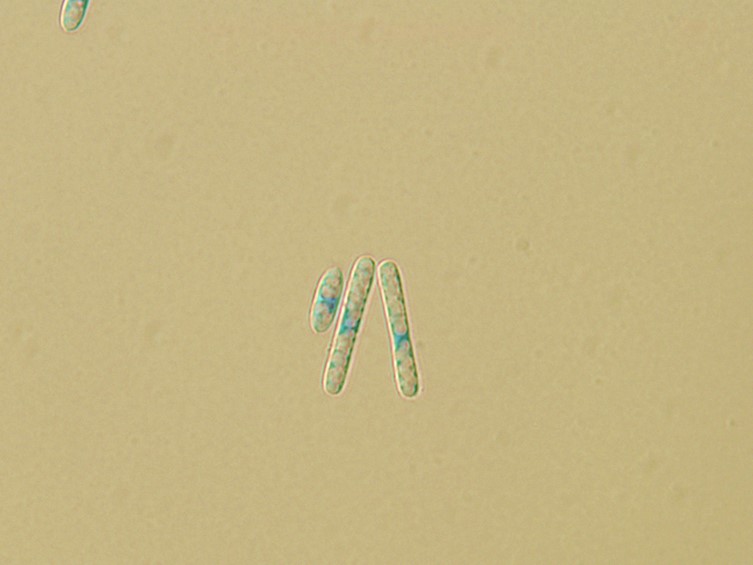 Ascospores divide into part-spores, cylindrical, ends tapering 10-12.5 × 1.5-2 µm. Asexual morph: stromata hemispherical.
 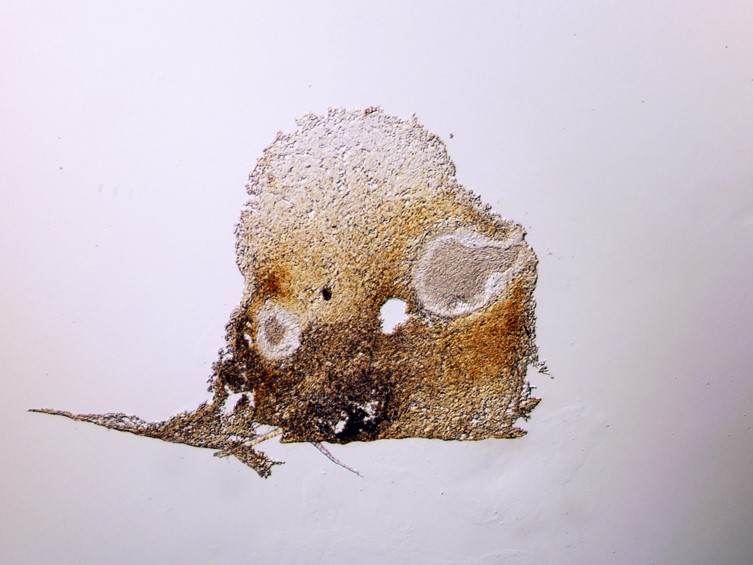 Conidioma pycnidial, embedded in stroma, circular, ovoid, orifices often blocked with pale
 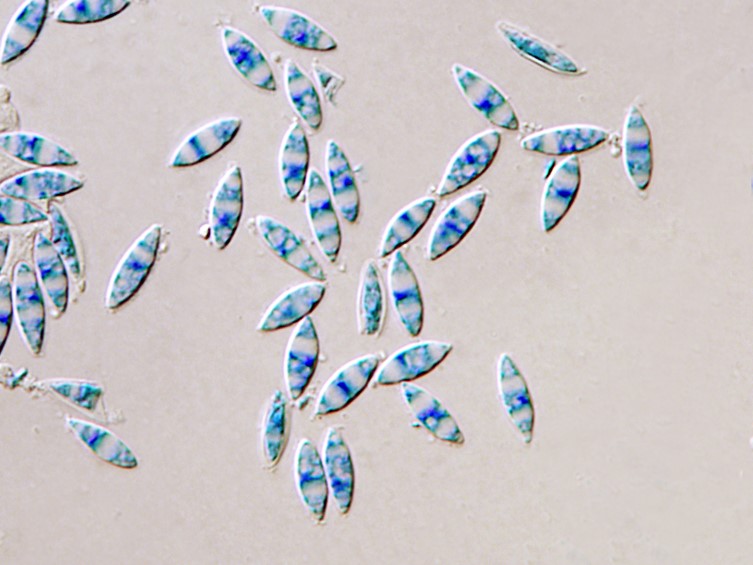 conidia, 100-250 µm diam. Paraphyses absent; conidiophores phialidic, solitary, irregular, or verticillate, bearing whorls of 2-3
 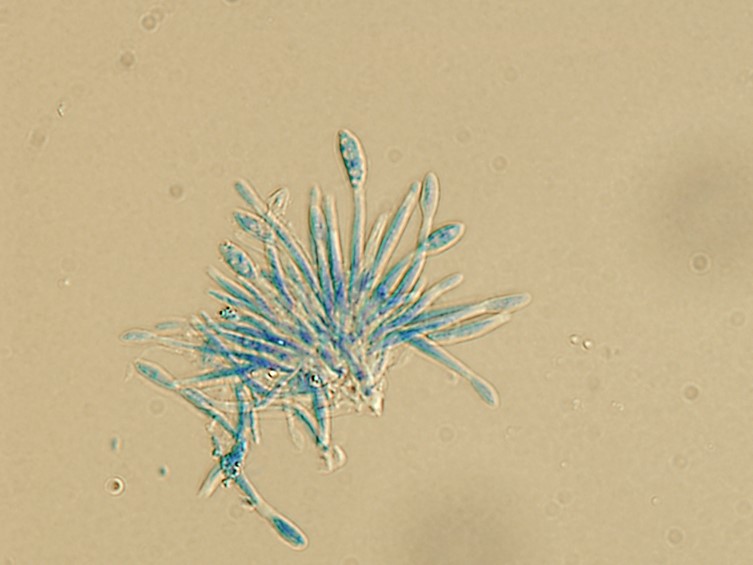 phialides. Phialides slender, up to 25 µm long, ca 1.25 µm wide. Conidia fusoid to broadly fusoid, ends tapering 7.5-10 × 2.5-4 µm.
Culture characteristics:
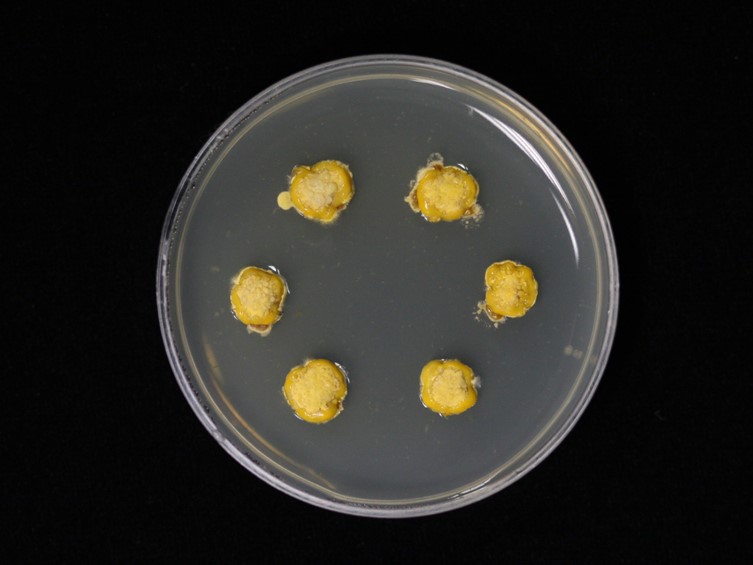 Colonies on PDA attaining a diam of 6 mm diam, pale yellow and surrounded by whitish slight hypothallus, spore mass yellow to orange-yellow spreading over the stroma.
Reference:
Chaverri P, Liu M, Hodge KT (2008). A monograph of the entomopathogenic genera Hypocrella, Moelleriella, and Samuelsia gen. nov. (Ascomycota, Hypocreales, Clavicipitaceae), and their aschersonia-like anamorphs in the Neotropics. Studies in Mycology 60: 1–66.
DOI: https://doi.org/10.3114/sim.2008.60.01Petch T (1921). Studies in entomogenous fungi: II. The genera Hypocrella and Aschersonia. Annals of the Royal Botanic Gardens Peradeniya 7: 167–278.
Species |
Strain |
Compound |
Pubchem CID |
Biological activity |
Reference |
|---|
|
Strain |
RPB1 | TEF1 |
|---|---|---|
| BCC 1713 | DQ385008 | DQ384968 |
| BCC 1765 | DQ385010 | DQ384958 |