
Description:
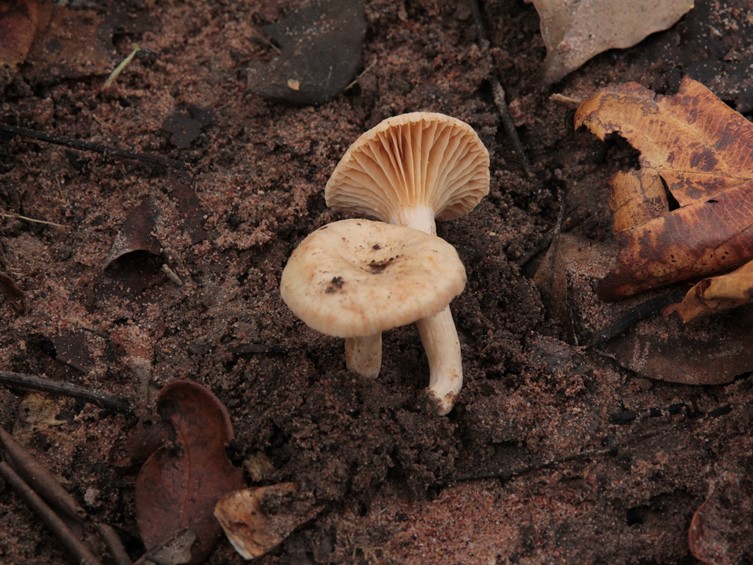
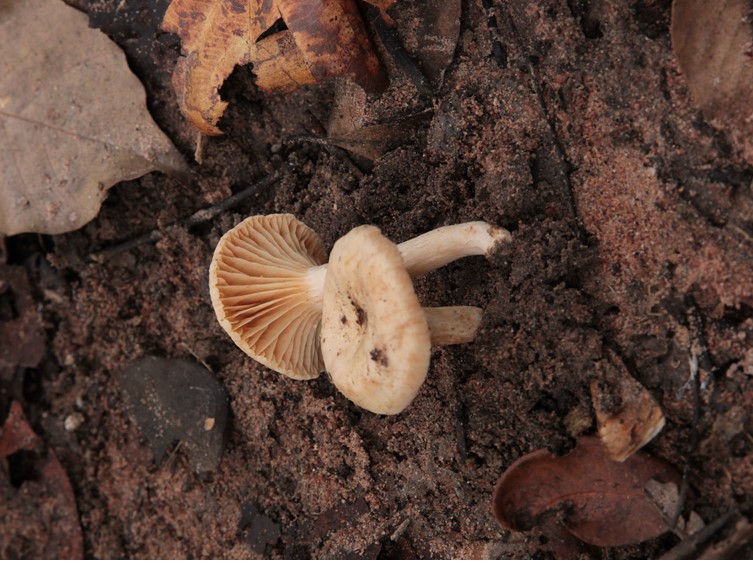
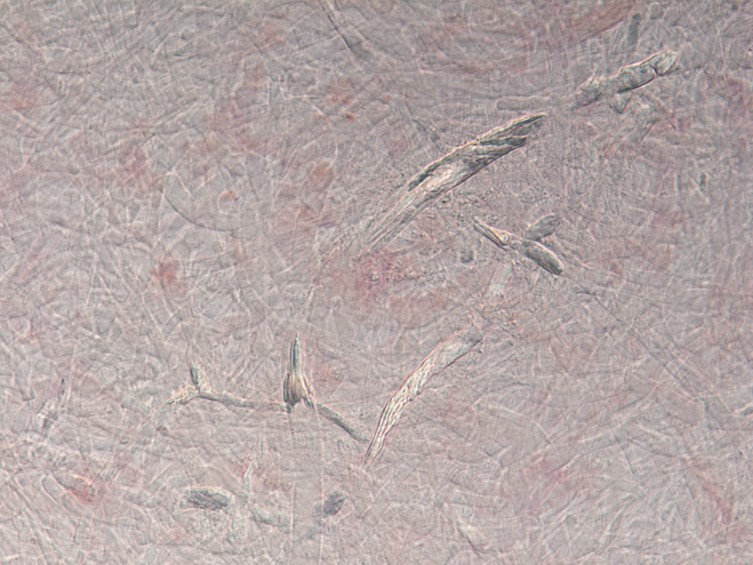
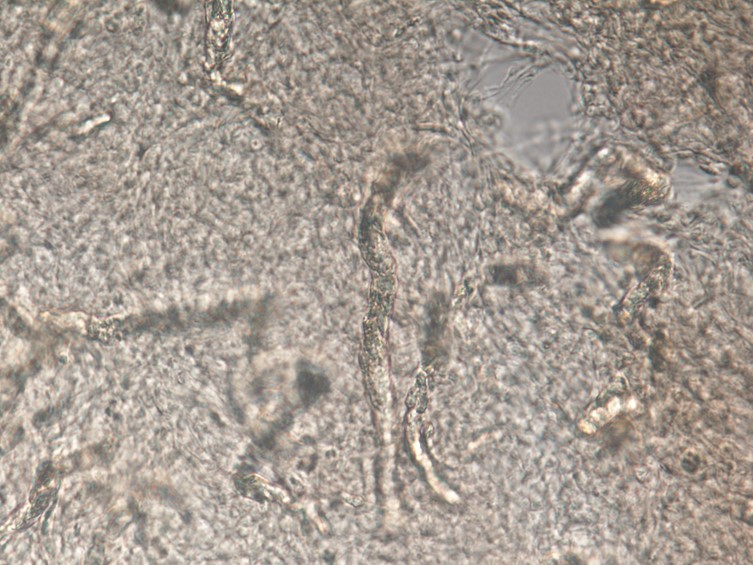
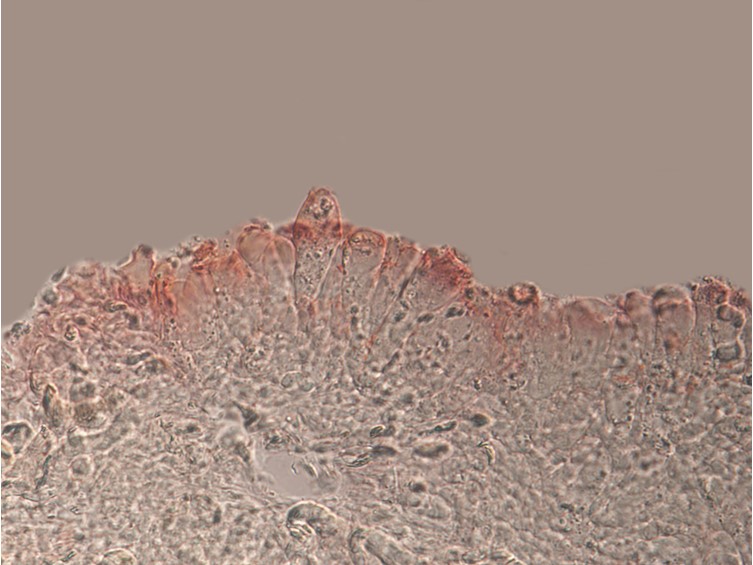
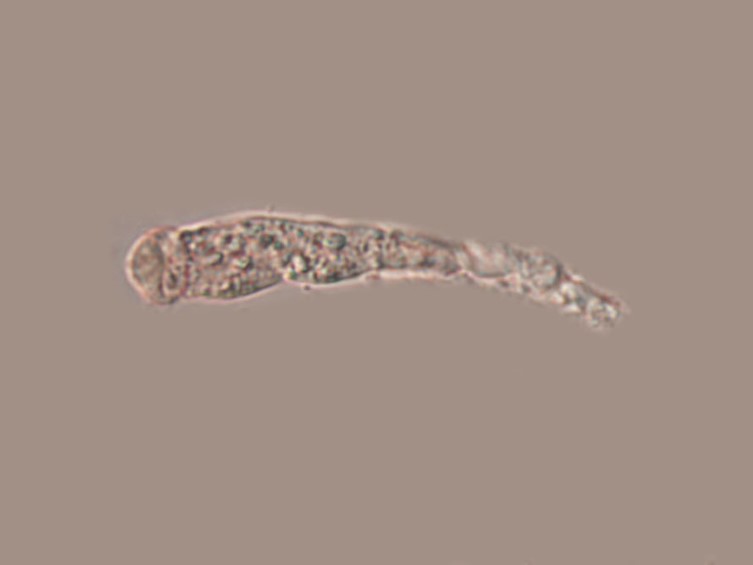
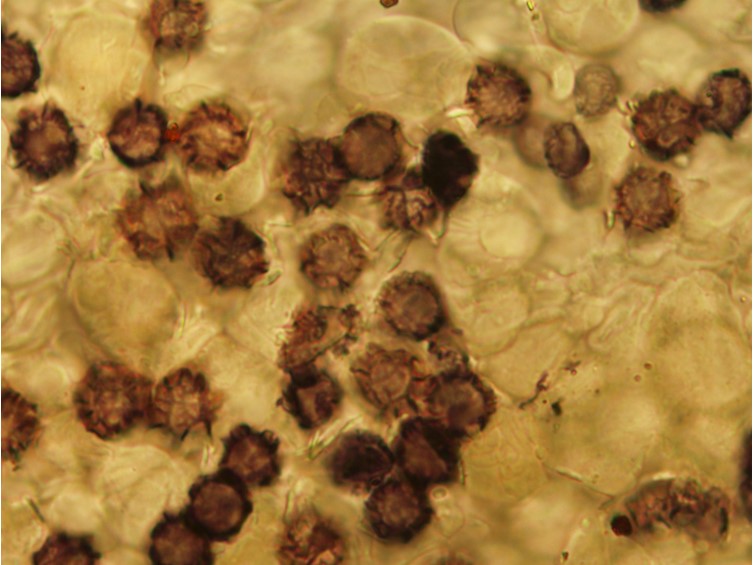
Pileus 40–42 mm diam., plano-convex, sometimes infundibuliform, centre slightly depressed, surface velutinous, dry, light yellowish pink, but paler towards the margin; extreme margin dark cream-coloured. Lamellae adnate or decurrent, subdistant, broad, even, unequal, 4–10 mm broad, light yellowish pink, orange-pinkish or brownish pinkish by the latex; edge entire, concolourous. Stipe 38–49 × 6–9 mm, slightly tapering downwards, sometimes curved at base; surface dry, smooth, paler than lamellae, pale orange yellow. Context rather thin in pileus, stuffed in stipe, white, staining pinkish or orange-pinkish after cutting, remaining white in the centre of the stipe; smell faintly fragrant. Latex abundant, white. Spore print not observed. Basidiospores 7–8 × 6.75–7.5 µm, globose to subglobose; ornamentation amyloid, a somewhat dense but incomplete reticulum with various free terminal ends, composed of rather irregular ridges that are 1.5 µm high, more or less acute, sometimes with a split appearance and mostly irregularly crenulate edges; numerous isolated warts and short ridges present; plage distally amyloid. Basidia 35–75 × 10–15 µm, subclavate to clavate, mostly 4-spored but 1- and 2-spored basidia also present, sometimes with granular or guttate contents; sterigmata 2.5–10 × 1–3 µm. Pleuromacrocystidia absent. Pileipellis 35–80 µm thick, containing pale brown, intracellular pigmentation, composed of long and slender terminal elements, 2–6 µm, cylindrical, subfusiform, sometimes subclavate. Stipitipellis a cutis or trichoderm, 30–75 µm thick, hyaline.
Reference:
Le HT, Stubbe D, Verbeken A, et al. (2007). Lactarius in Northern Thailand: 2. Lactarius subgenus Plinthogali. Fungal Diversity27: 61–94.
Species |
Strain |
Compound |
Pubchem CID |
Biological activity |
Reference |
|---|
|
Strain |
|---|