
Description:
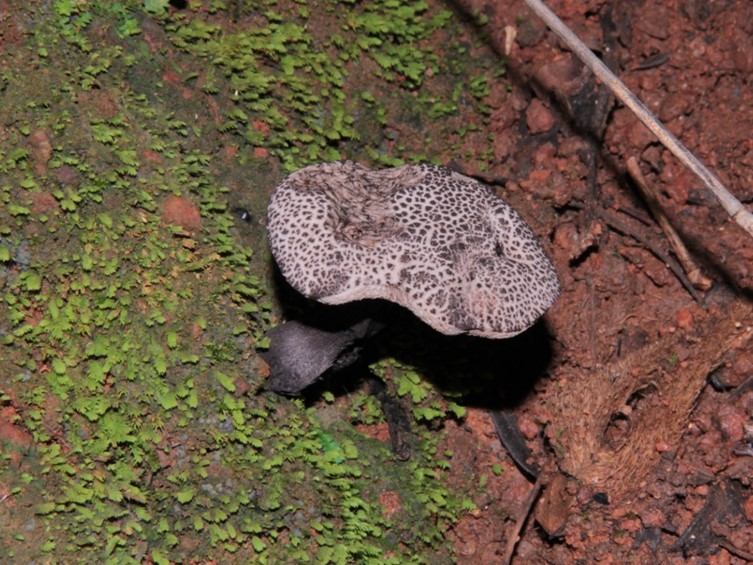
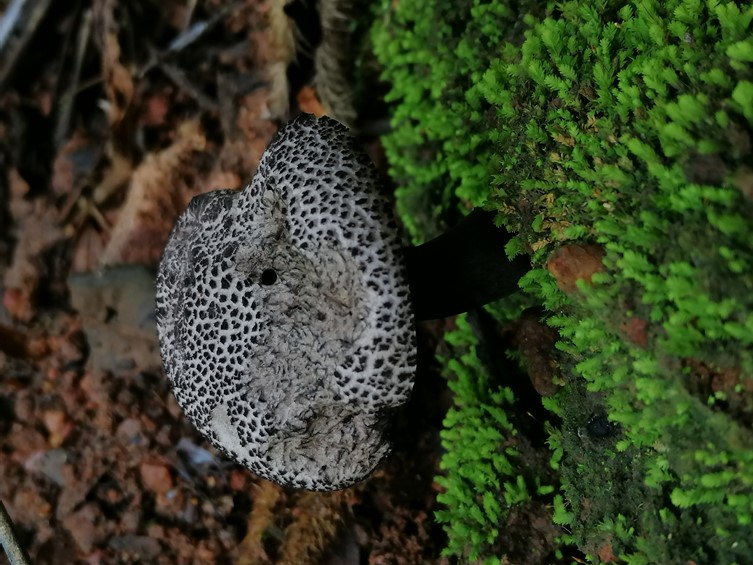
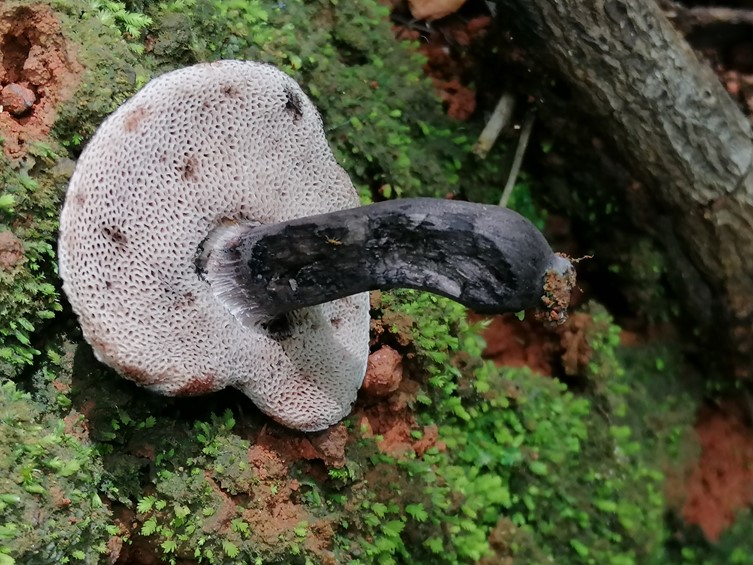
Basidiocarp 40 mm diam, initially convex, surface dry, squamulose, light greenish grey with black squamules, becoming black slowly when bruised or with age, margin entire, encurved. Pileus surface orange with 3% KOH and phenol but unchanging with FeSO4 and 3% NH4OH. Pore surface depressed near the juncture of stipe with age, yellowish grey or paler when fresh, slowly becoming moderate yellowish pink with maturity, becoming initially black to charcoal when brushed, turning to orange with 3% KOH, pores 2-3 per mm angular, simple. Tubes adnate, 4-5 mm long, pinkish white to greyish red becoming black on 5 minutes after exposure. Stipe 30 × 8 mm, insertion central, cylindrical to clavate, becoming narrow towards base, smooth, reticulation absent, dark greyish purple, unchanging with chemical reaction. Context up to 7 mm wide in pileus, yellowish white on exposure, quickly becoming dull red, unchanging with chemical reaction. Spore print not observed.
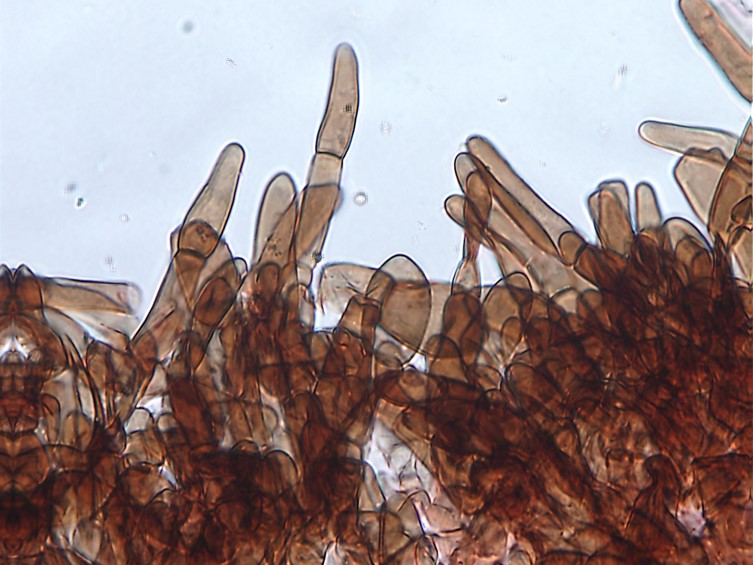
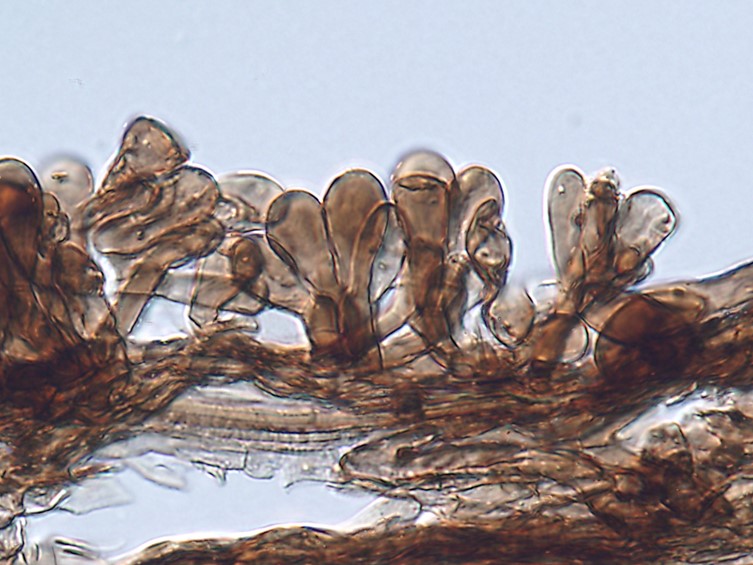
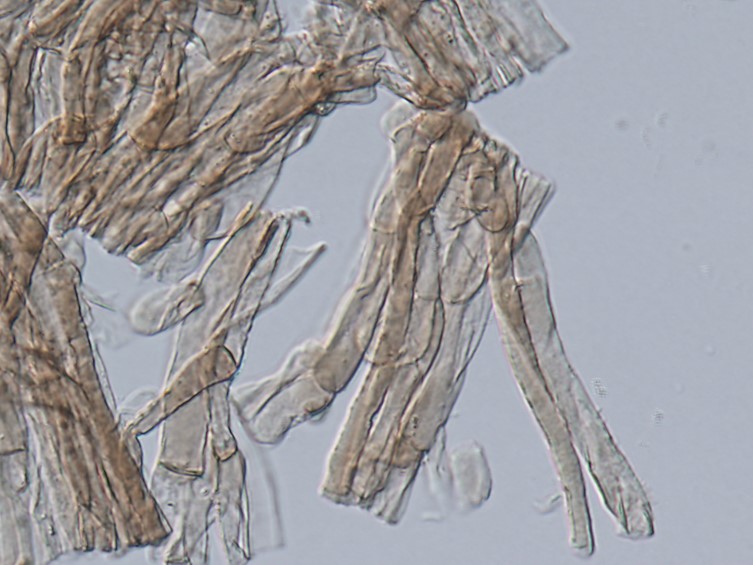
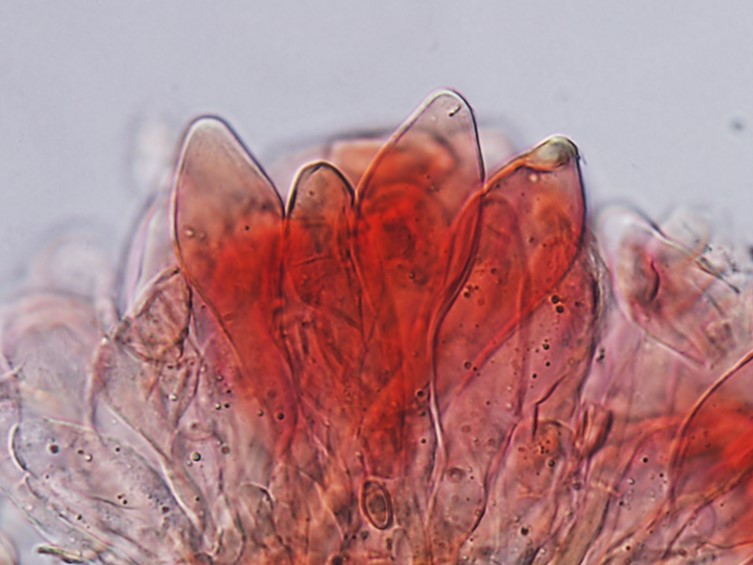
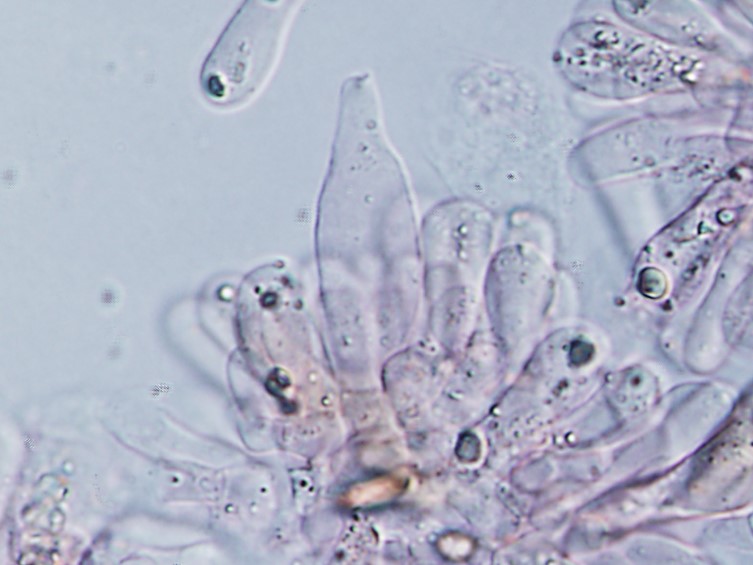
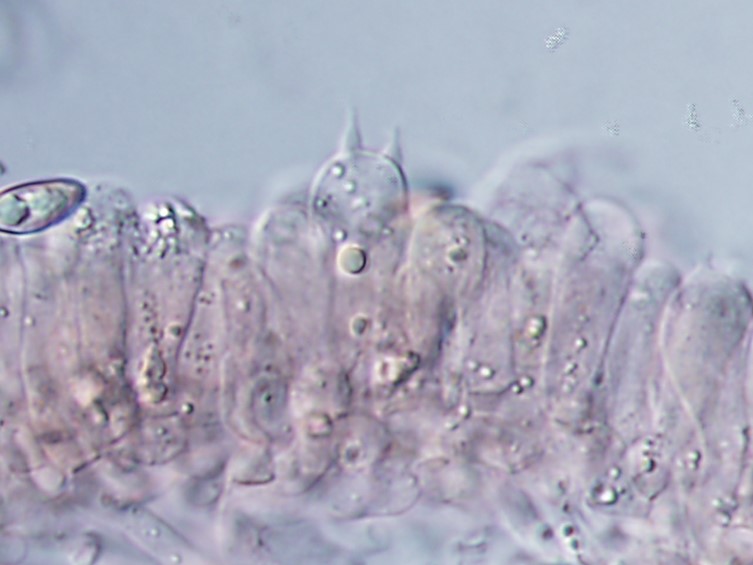
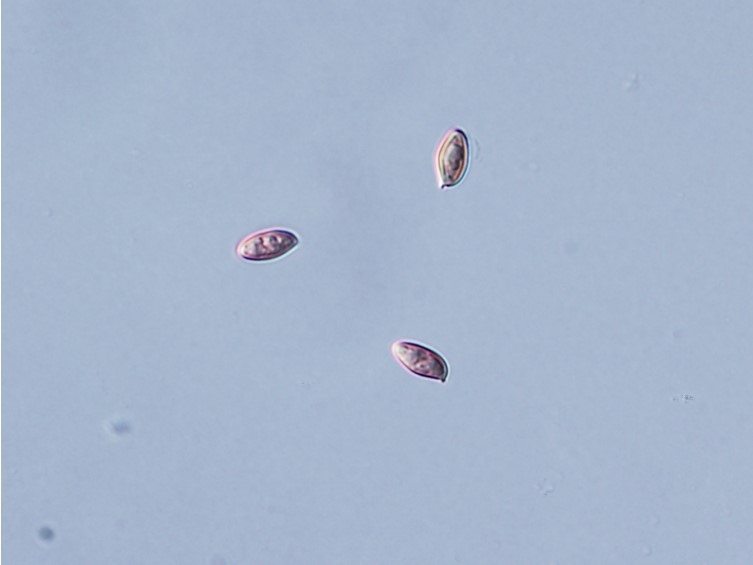
Basidiospores 10.0-12.5 × 5.0-5.5 µm, cylindrical, subfusiform to fusifrom, inequilateral, thin-walled, smooth. Basidia 32.5-37.5 × 10.0-11.3 μm, 4 sterigma, clavate, hyaline. Pleurocystidia 55.0-67.5 × 15.0-20.0 µm, rare, lanceolate to ventricose, thin-walled, hyaline. Subhymenial layer up to 10 μm thick, pseudoparenchymatous. Tube edge fertile with basidia and cystidia, cheilocystidia 30.0-45.0 × 10.0-17.5 μm, frequent, narrowly lanceolate with rounded to capitate apex, thin-walled, hyaline to pale yellow. Hymenophoral trama divergent, hyphae septate, up to 10 μm wide. Pileipellis a trichoderm, 250-350 μm thick, composed of erect to suberect, loosely interwoven unbranched to rarely branched hyphae, 7.5-20.0 µm wide, septate, thick-walled, pale brown to brown. Stipitipellis 6.3-12.5 µm wide, fertile near the apex of stipe. Caulobasidia not observed.
Reference:
Parihara A, Hembromb ME, Vizzin A, et al. (2018). Indoporus shoreae gen. et sp. nov. (Boletaceae) from tropical India Cryptogamie Mycologie 39: 447–466.
DOI: https://doi.org/10.7872/crym/v39.iss4.2018.447Species |
Strain |
Compound |
Pubchem CID |
Biological activity |
Reference |
|---|
|
Strain |
|---|