
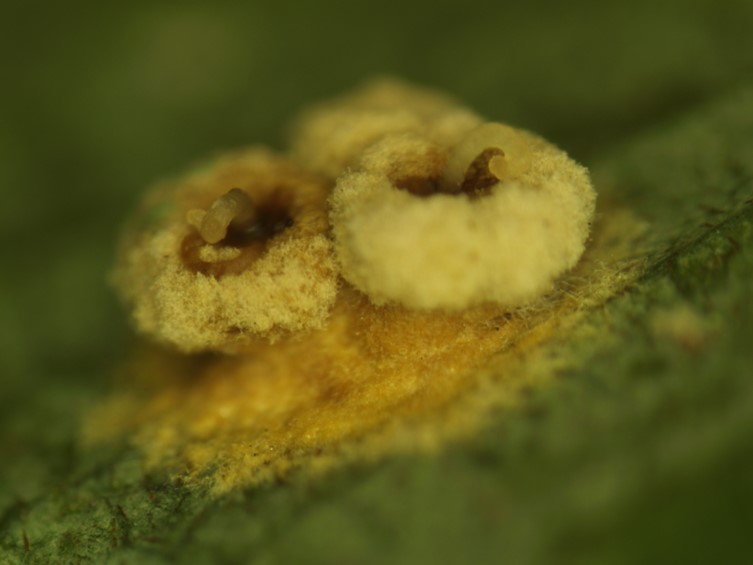
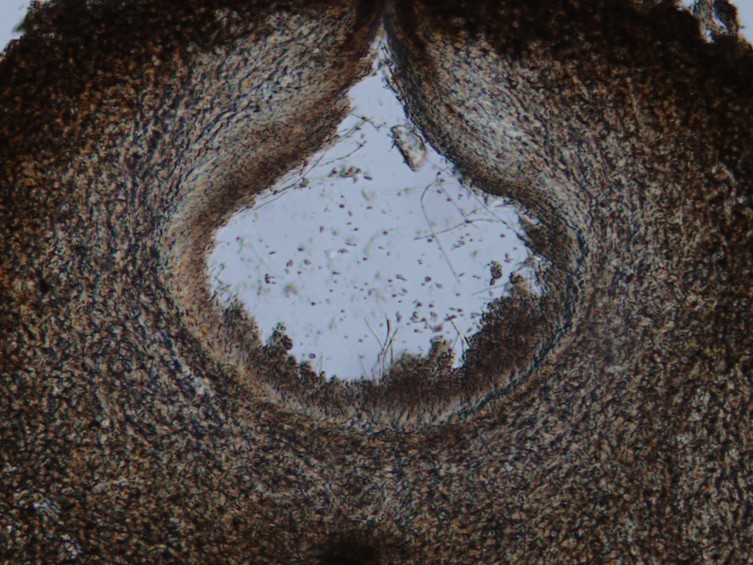
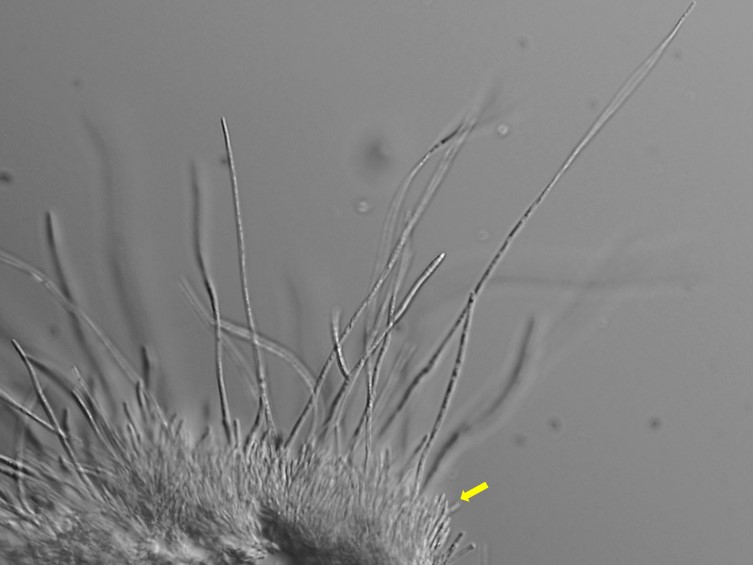
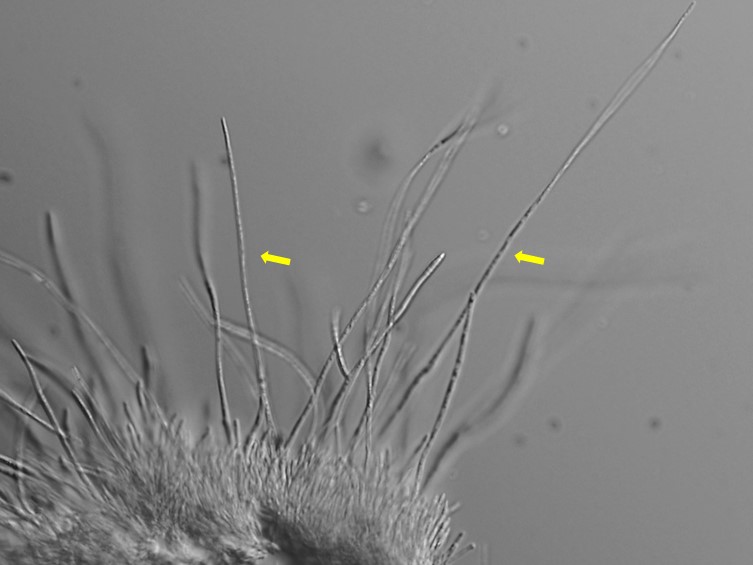
Holotype:
THAILAND, Ranong Province, Khlong Naka Wildlife Sanctuary, Khlong Naka study trail, 12 Jan. 2006, L.T. Hung, S. Mongkolsamrit, P. Srikitikulchai, K. Tasanathai, B. Tongnuch, W. Tongsridam, holotype BBH 17373, ex-type living culture BCC 20635.
Habitat:
Underside of dicotyledonous leaves.
Host:
Scale insects (Hemiptera).
Description:
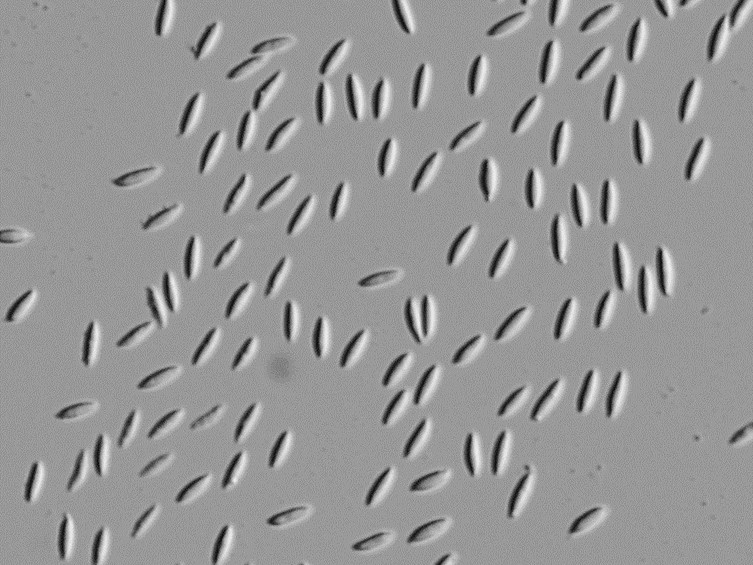
Stromata pulvinate, oval or circular, consisting of dense interwoven hyphae, base constricted, spreading, forming a membranous hypothallus, up to 2.5 mm diam, 2 mm high, cream-brown when fresh. Conidiomata pycnidial, usually single, embedded in the centre of the stroma, 350-400 mm high, 300-350 mm diam. Conidiogenous cells phialidic, cylindrical, up to 20 mm long. Pycnidial paraphyses present, linear, filiform, flexuous, up to 150 mm long, 1.5 mm wide. Conidia fusoid, sometimes narrowly fusiform, with rounded ends, 5-6 × 1.2-1.5 mm.
Culture characteristics:
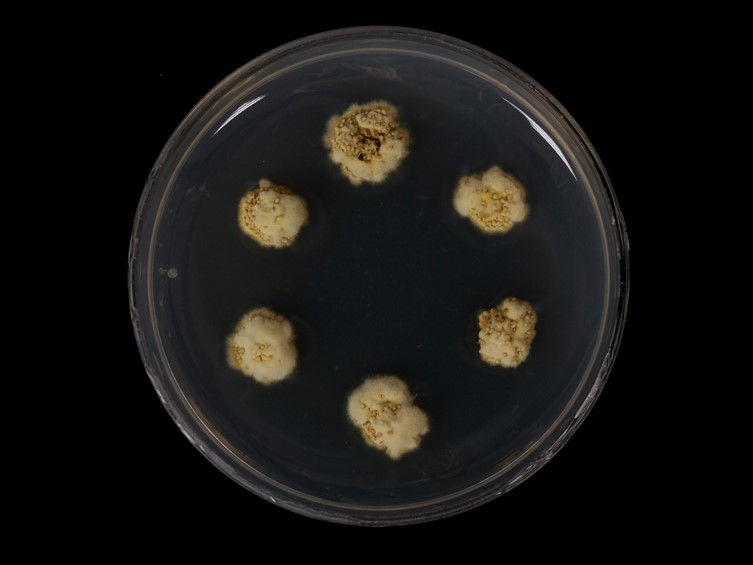
Colonies on PDA slow-growing, attaining 4–6 mm diam in 4 wk, with old cultures developing a pale brown pigment in PDA. Stromatic colonies pale brown, becoming darker when old, forming compact, wrinkled stromata. Conidial masses pale yellow, appearing as abundant slime masses from immersed pycnidia scattered over the surface.
Reference:
Mongkolsamrit S, Luangsa-ard JJ, Spatafora JW, et al. (2009). A combined ITS rDNA and beta-tubulin phylogeny of Thai species of Hypocrella with non-fragmenting ascospores. Mycological Research 113: 684–699.
DOI: https://doi.org/10.1016/j.mycres.2009.02.004Species |
Strain |
Compound |
Pubchem CID |
Biological activity |
Reference |
|---|
|
Strain |
DQ365836 | DQ365849 | EU409583 |
|---|---|---|---|
| BCC 17847 | - | - | - |
| BCC 20635 | - | - | - |
| BCC 7959 | - | - | - |