
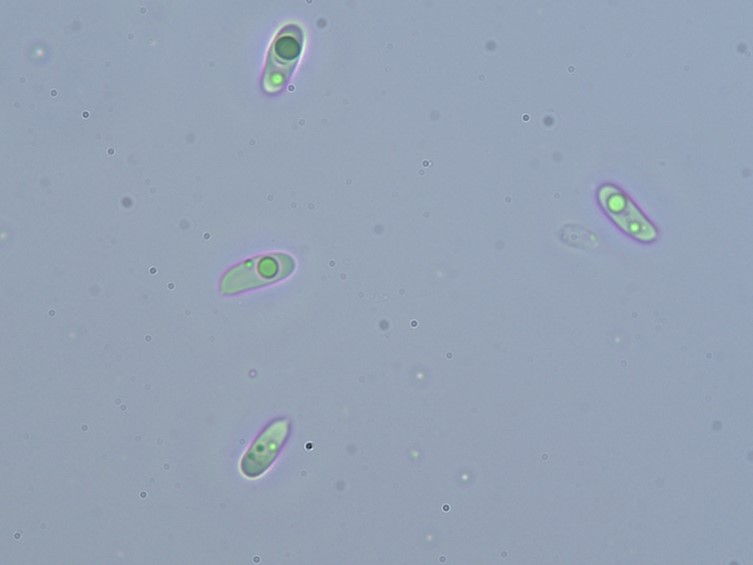
Description:
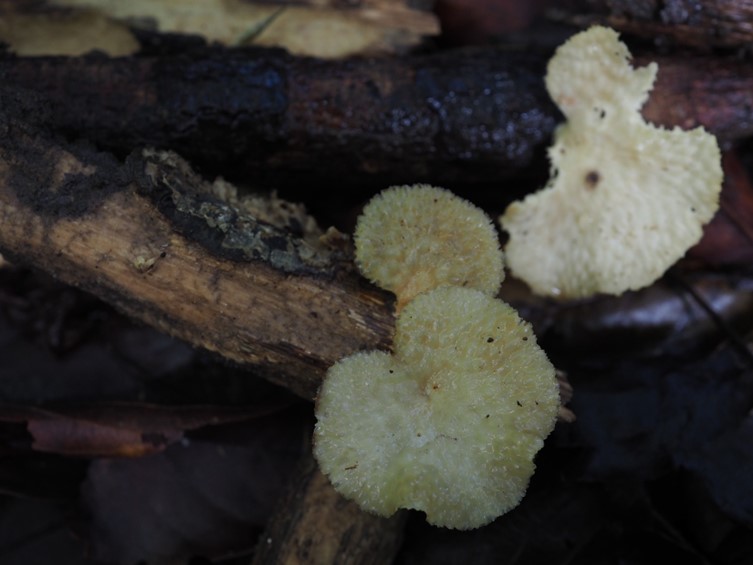
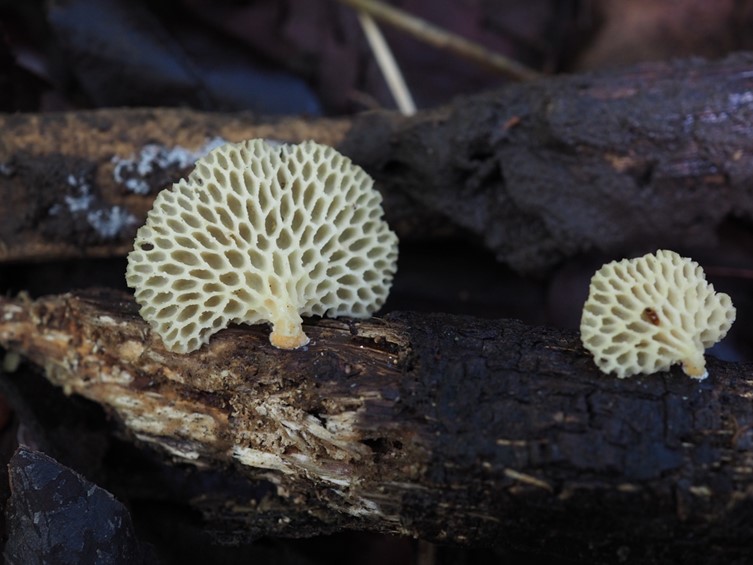
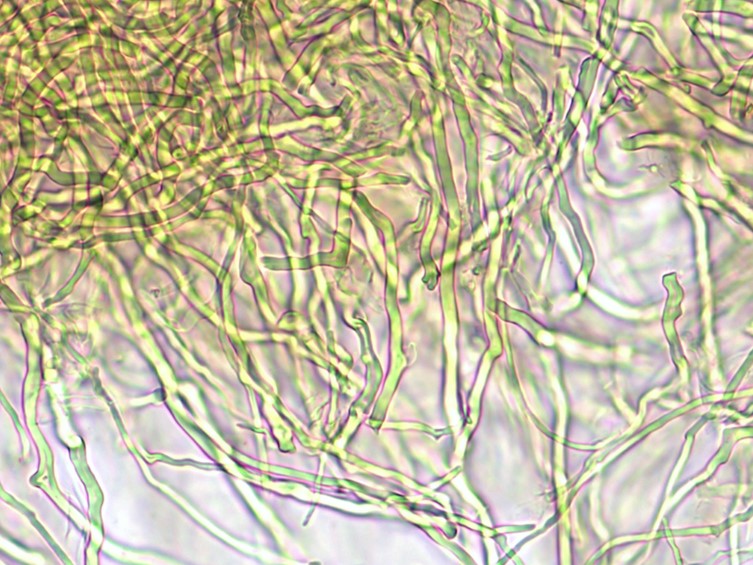
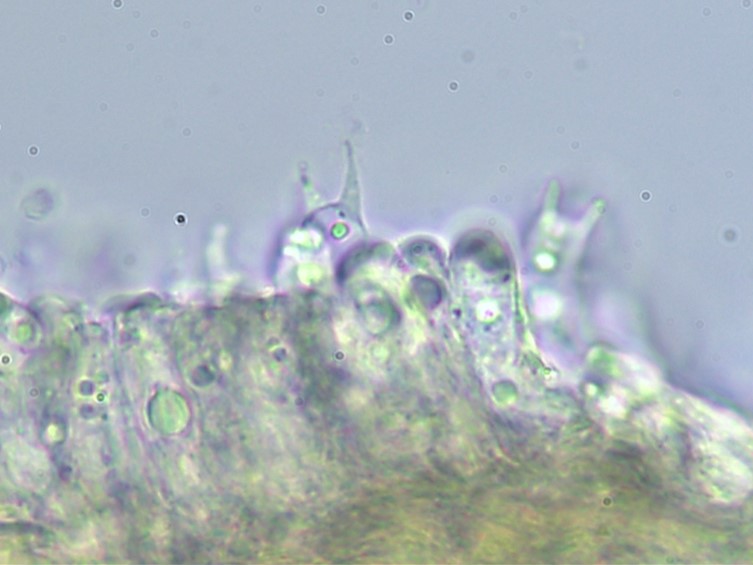
Basidiomata annual, solitary, caespitose, or gregarious, leathery when fresh, becoming brittle upon drying; substipitate to nearly pileate with a tapered base, readily separable from host substrate. Pileus 30–60 × 22–45 mm, semicircular to spathulate, often reflecting the configuration of the pores beneath; surface smooth, weakly zonate and faintly striate, occasionally sulcate near the base; coloration pale yellow when young, turning ochraceous with age and gradually darkening toward the margin. Margin sterile, entire to lobed in some specimens, acute, inrolled when dry, pale orange to light orange in youth, drying to brownish-orange or dark brown. Hymenophore poroid; pores hexagonal to radially elongated, measuring 1–5 × 0.5–2.5 mm; pore surface yellowish-white to pale yellow in young basidiomata, becoming pale orange at maturity. Context homogeneous, cream-colored, up to 2.5 mm thick in the pileus region, thickening gradually toward the base. Tubes 1–5 mm long, shallow near margin and base; dissepiments thin, entire when young, becoming somewhat lacerate at maturity; tube surface orange to deep orange when young, maturing golden yellow. Stipe lateral, 3–5 × 2–3 mm, glandular, smooth, concolorous with the pileus surface.
Reference:
Kisku AV, Gore VU, Hembrom ME, et al. (2021). Morphological description and phylogenetic estimation of Favolus roseus (Polyporaceae): first documented records for the Indian mycobiota. Check List17: 1171–1180.
Species |
Strain |
Compound |
Pubchem CID |
Biological activity |
Reference |
|---|
|
Strain |
|---|