
Description:
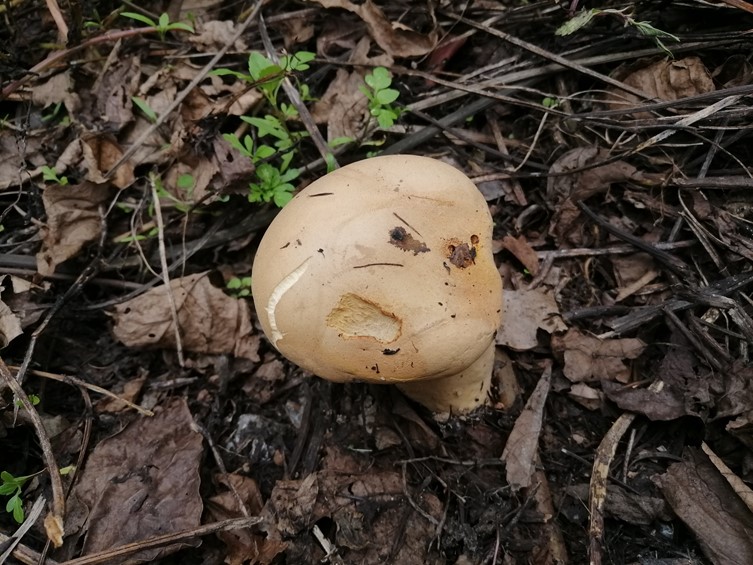
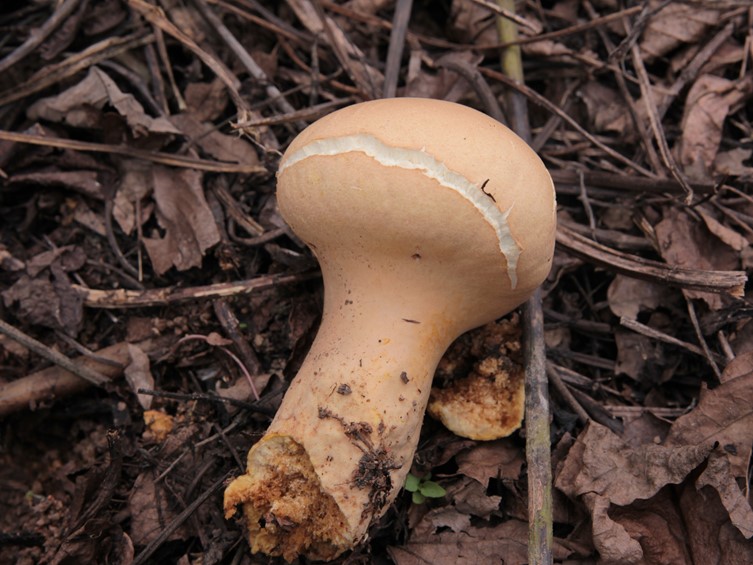
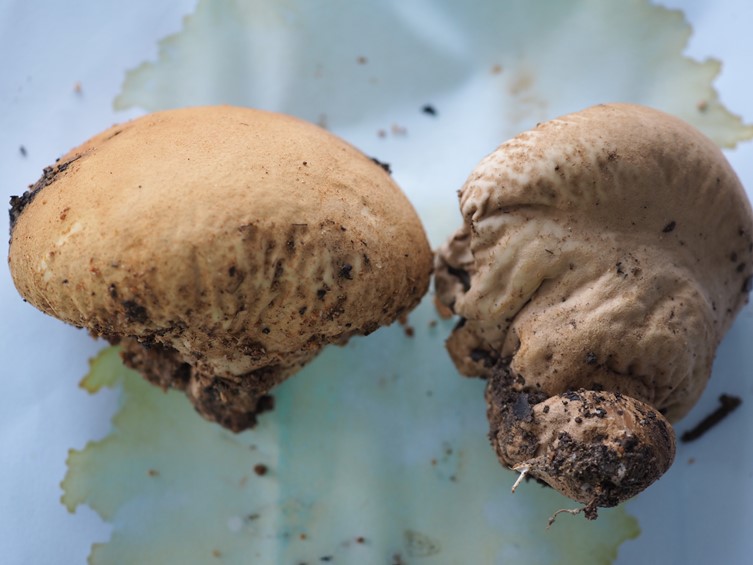
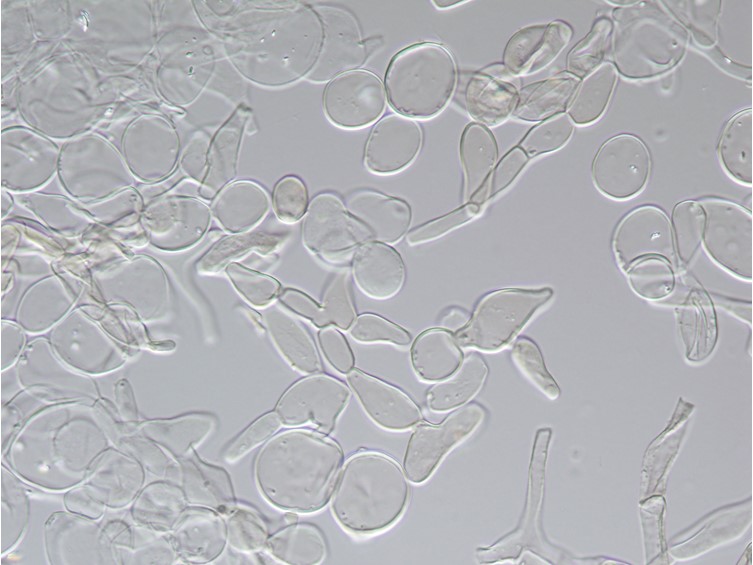
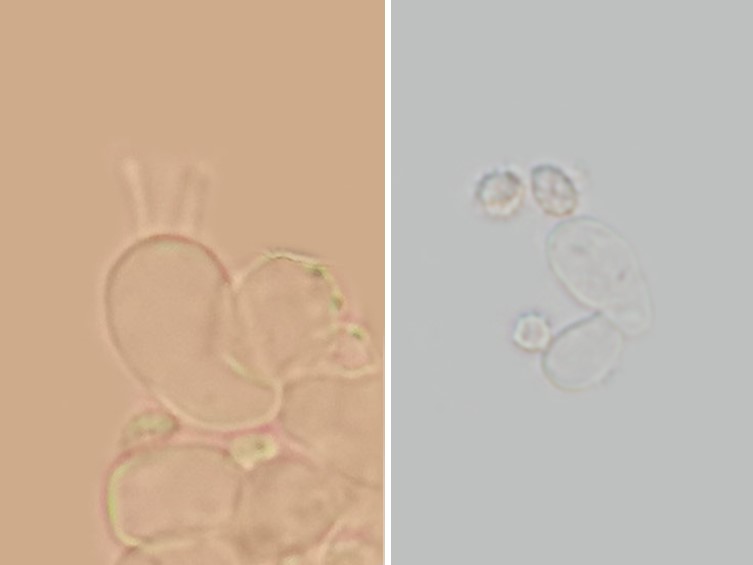
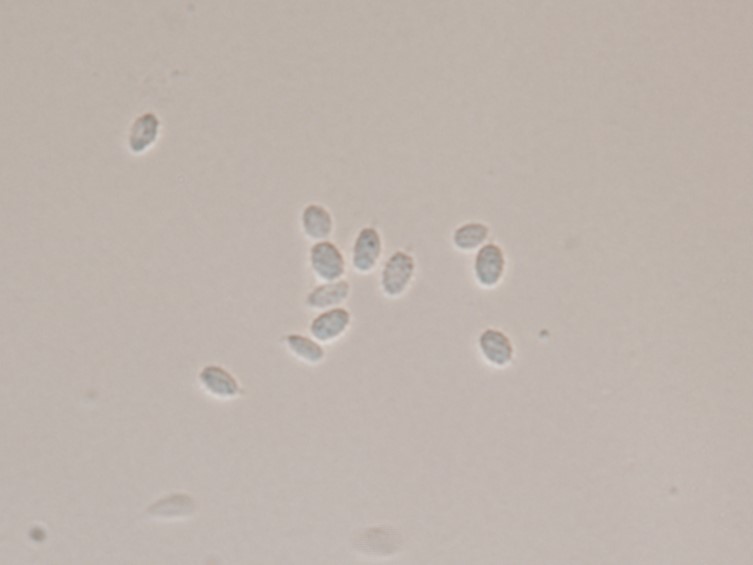
Fruitbodies pyriform, turbinate to broadly excipuliform, 5.5-6.3 cm high and 6.5-8.3 cm diam in the upper part, with one or several thin mycelial threads. Exoperidium 2-layered, thin, easily detachable from the gleba, fragile, tomentose, yellow-orange to fulvous, slightly wrinkled, formed by hyaline, septate, branched non porous hyphae, 4-8 μm thick, intermixed with hyaline, thin-walled vesicles 12.5-50.0 μm diam, with underlying pseudoparenchymatous layer. Endoperidium olive-brown, formed by septate, dichotomously branched non porous thin-walled hyphae ca. 5 μm diam. Gleba cottony, fulvous (light yellow in slightly immature specimens). Subgleba prominent, cellular, olive-brown, concolorous with a glebal centre in slightly immature specimens, 2-3 cm high and 2-3 cm diam. Basidia 9-15 × 5-8 μm, club shape. Basidiospores ellipsoid to oblong-ovoid, hyaline, echinate, uni- or two-guttulate, 3-5 × 2-3 μm, without pedicels. Spines 0.3-0.5 μm high arranged in broken longitudinal crests. Capillitium 2-4 μm diam, thinwalled, branching, subhyaline to light brown, formed by fragile threads, septate, with blunt ends. Pores roundish, up to 2 μm diam, with flat or unbended margins.
Reference:
Rebriev YA (2013). Calvatia holothurioides sp. nov. from Vietnam. Mikologiya i Fitopatologiya 47: 21–23.
Species |
Strain |
Compound |
Pubchem CID |
Biological activity |
Reference |
|---|
|
Strain |
|---|