
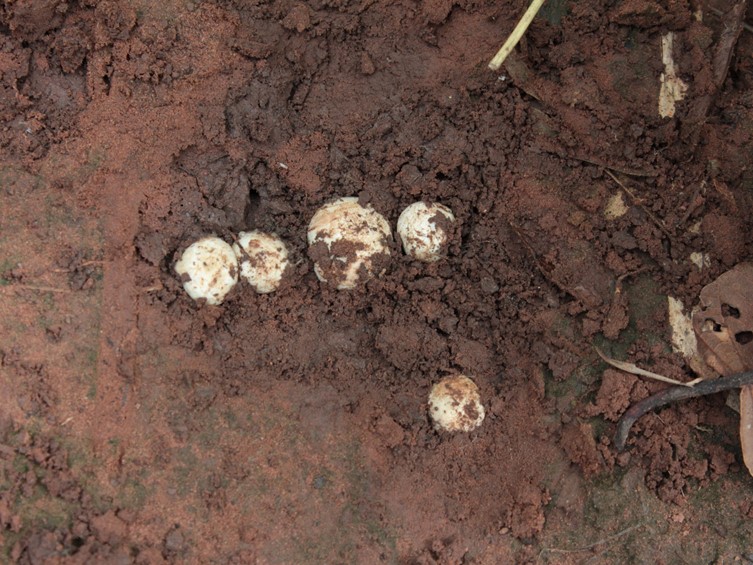
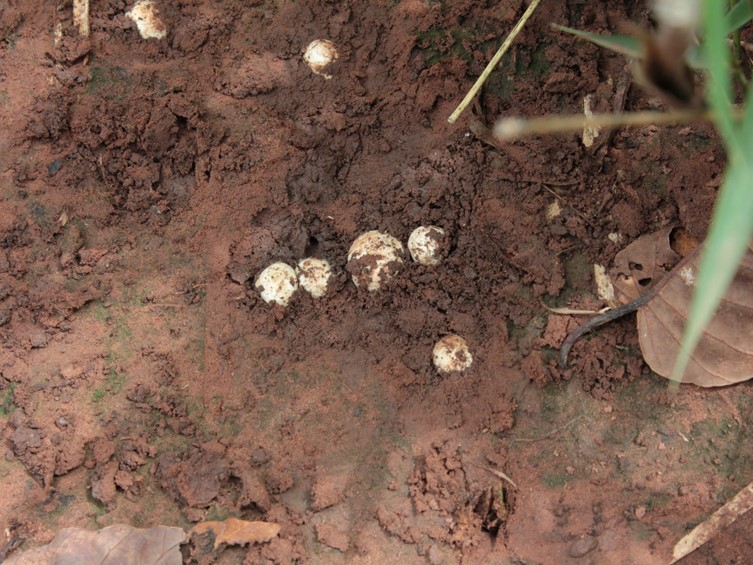
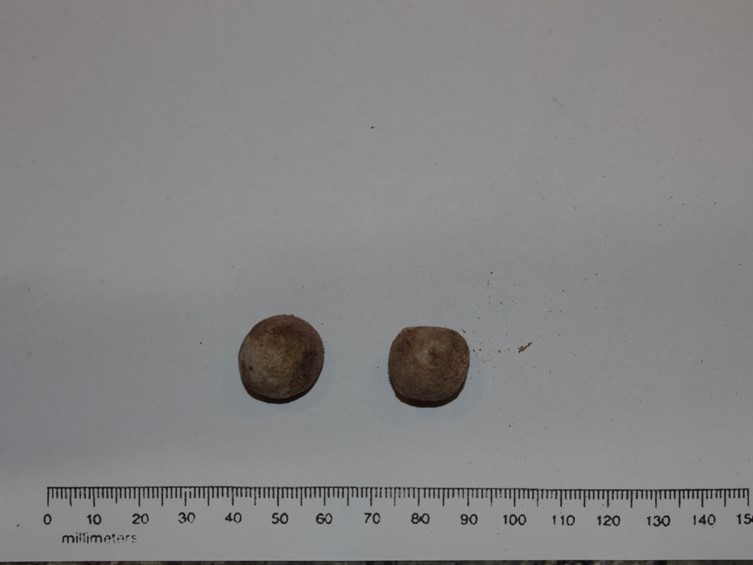
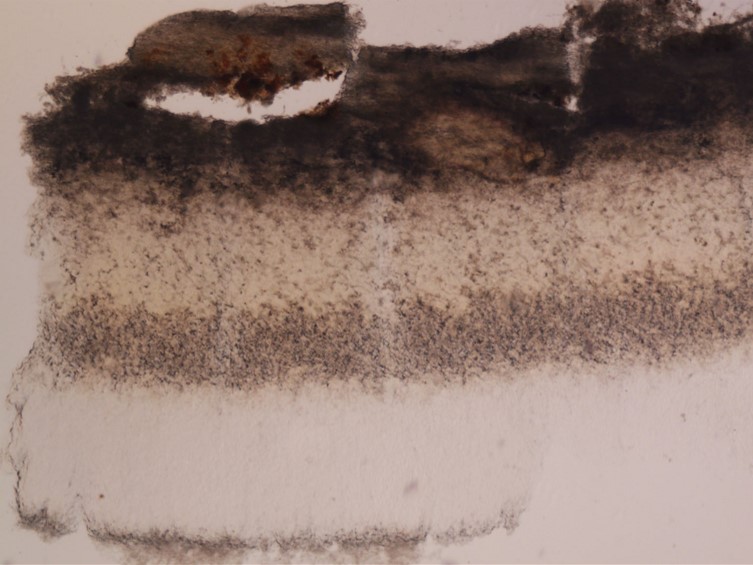
Habitat:
On soil under Dipterocarpus trees
Description:
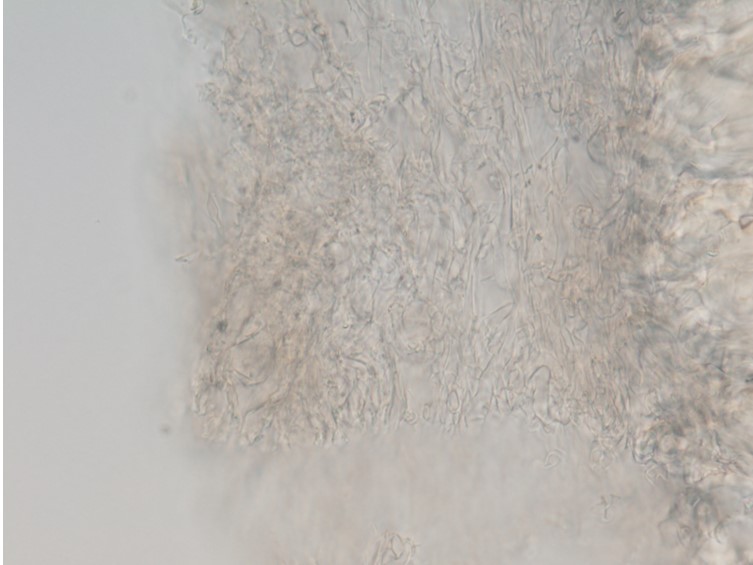
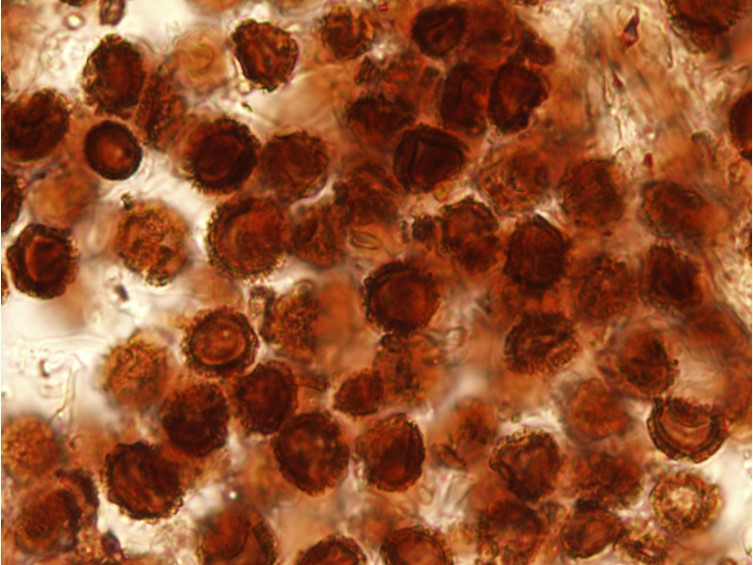
Basidiomes globose or subglobose, sessile 10–25 mm in diam., splitting to become star-shaped, covered with thin, white mycelial layer when unexpanded which tears away at maturity, often partly encrusted with soil debris; with slight odour when fresh. Outer peridium whitish, thick, composed of several layers, rigid, surface granulate, at maturity splitting into 5–12 acute rays which expand or recurve when moist and roll inwards again on drying; inner layer whitish becoming brown, thick, extensively longitudinally cracked in mature specimens. Endoperidum sessile, subglobose, 11–20 mm in diam., whitish to grey, opening by an apical, irregular mouth lacking defined peristome. Gleba white, purplish when mature, columella none; capillitium of long, branched, interwoven, hyaline, slightly encrusted, aseptate threads, 2.5–7 µm in diam.; thin-walled or thickened with a narrow, sometimes discontinuous lumen; clamp-connections present. Basidiospores globose, 8–9 µm diam. including ornamentation, brown, very densely ornamented with rounded, narrow, tapered, occasionally coalescent, spines 1–2 µm long.
Reference:
Phosri C, Martín MP, Sihanonth P, et al. (2007). Molecular study of the genus Astraeus. Mycological Research111: 275–286.
DOI: https://doi.org/10.1016/j.mycres.2007.01.004Species |
Strain |
Compound |
Pubchem CID |
Biological activity |
Reference |
|---|
|
Strain |
|---|