
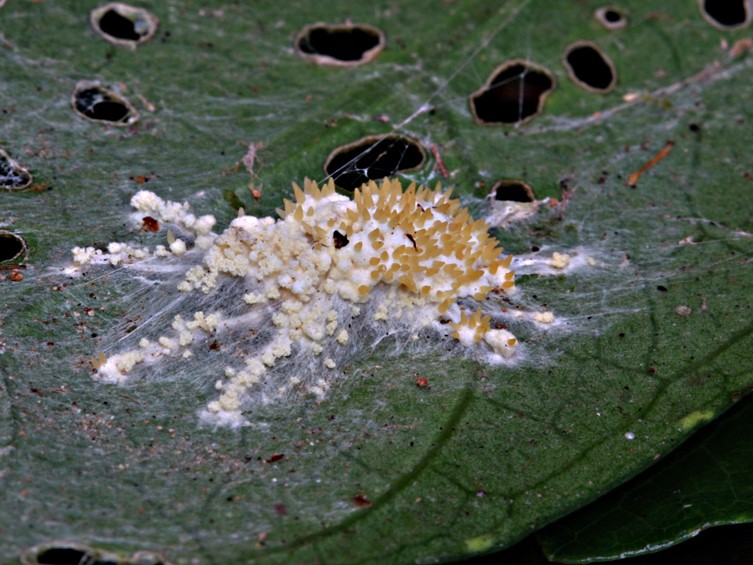
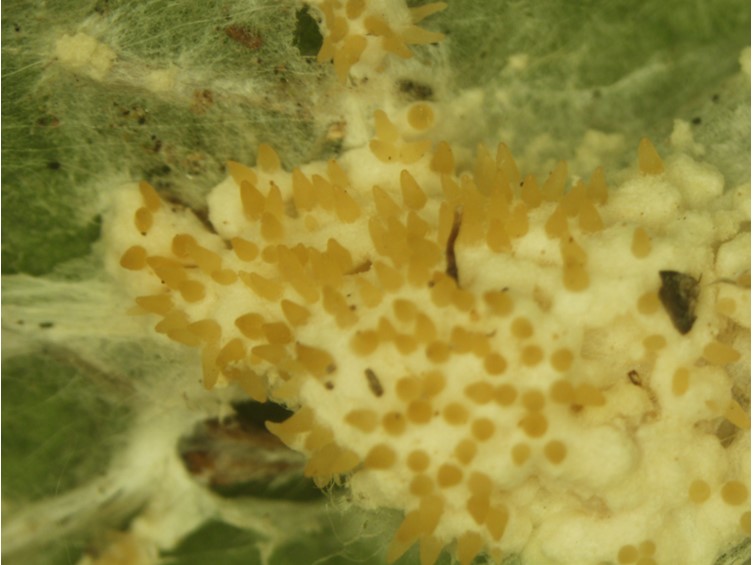
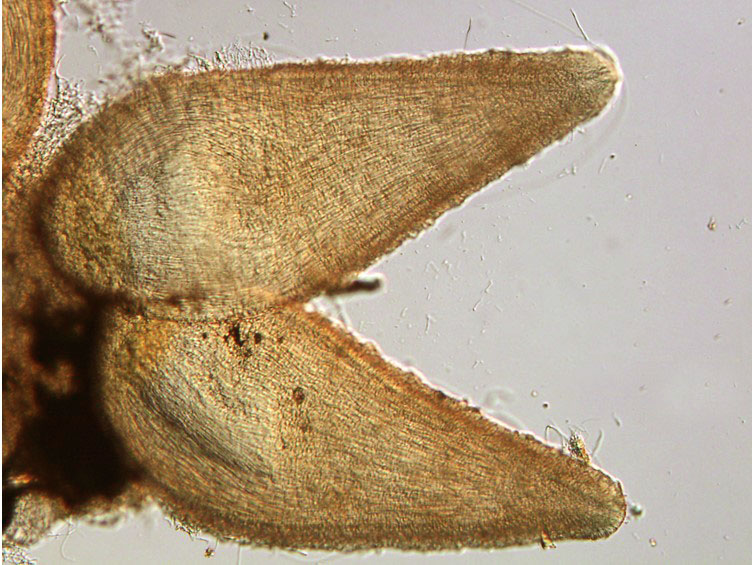
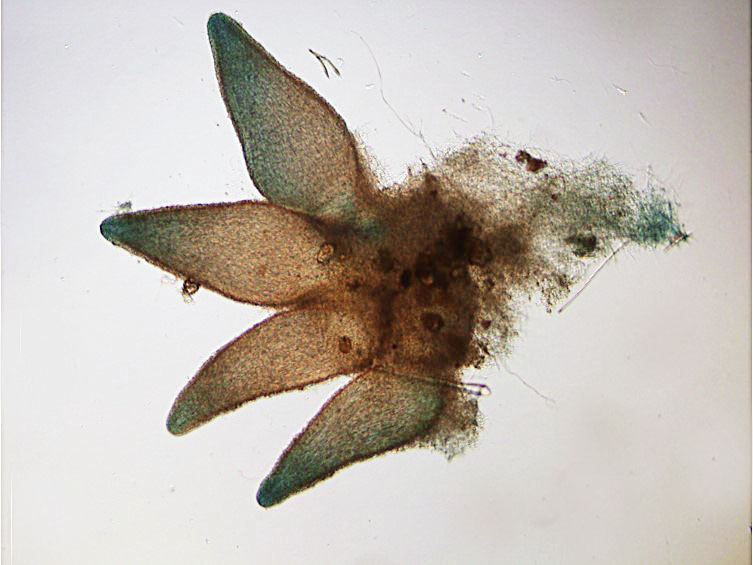
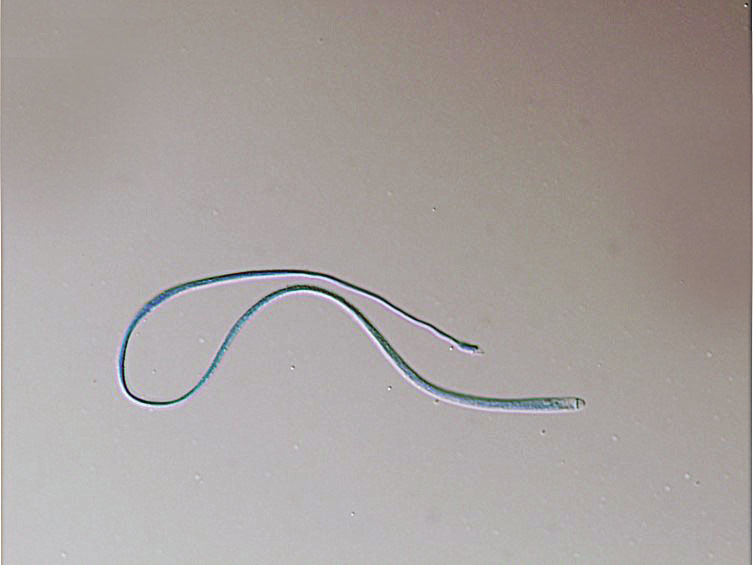
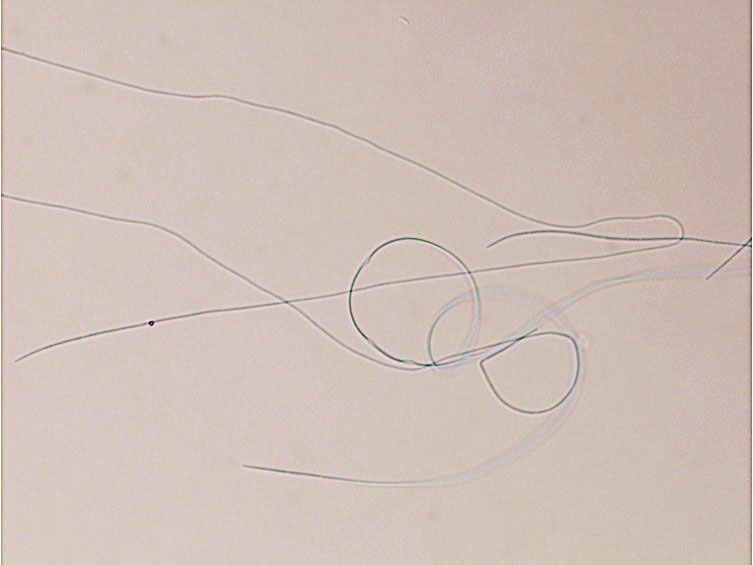
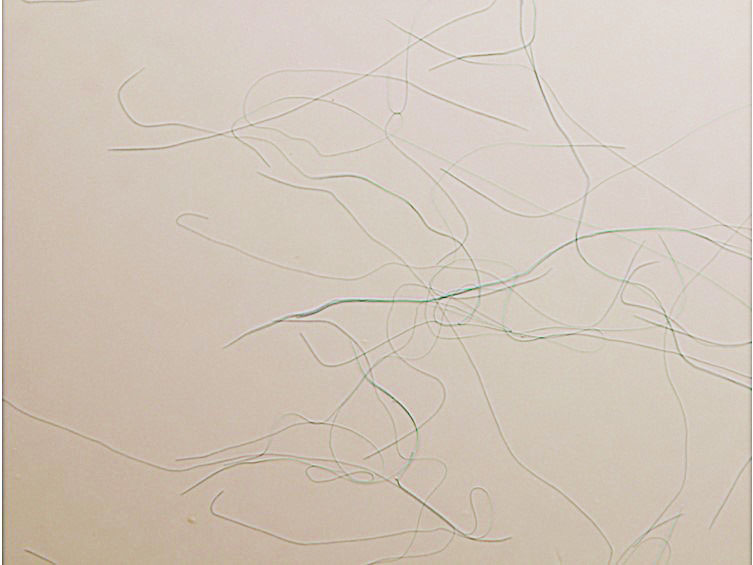
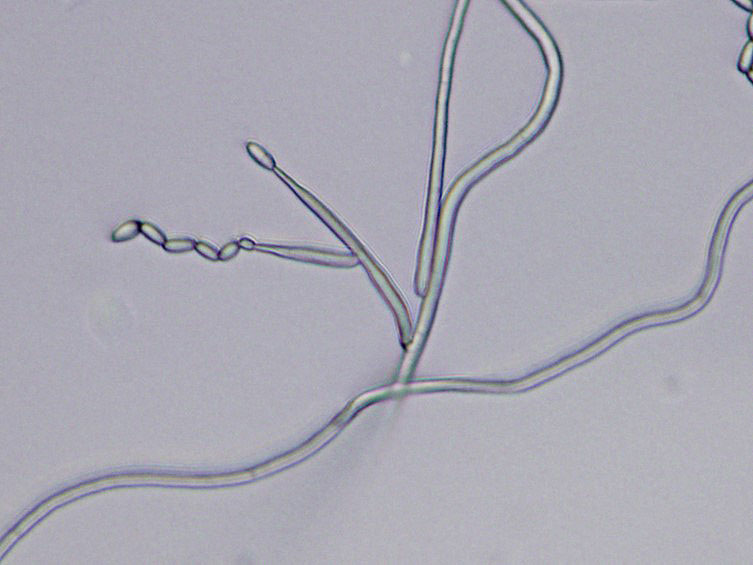
Holotype:
THAILAND, Nakhon Ratchasima Province, Khao Yai National Park, 2 Jun. 2011, K. Tasanathai, S. Mongkolsamrit, A. Khonsanit, W. Noisripoom, P. Srikitikulchai, K. Sansatchanon, holotype BBH 30582, ex-type living culture TBRC 7248.
Habitat:
Underside of a dicotyledonous leaf.
Host:
Spider (Araneae).
Description:
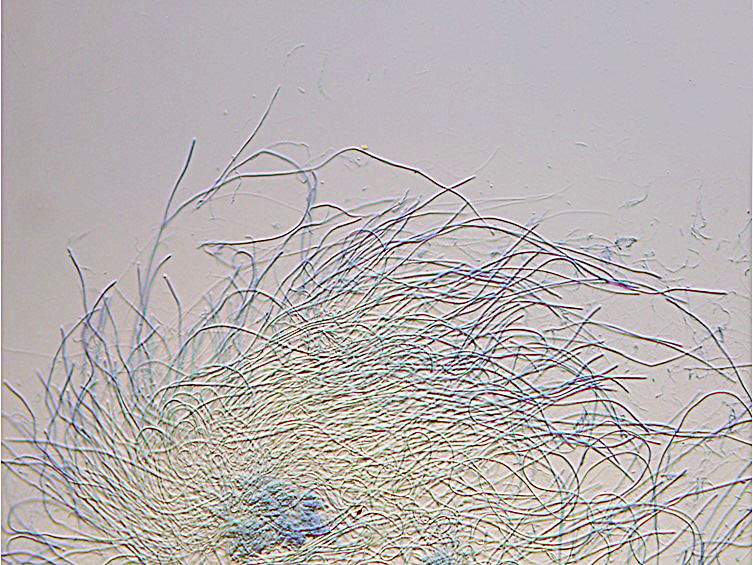
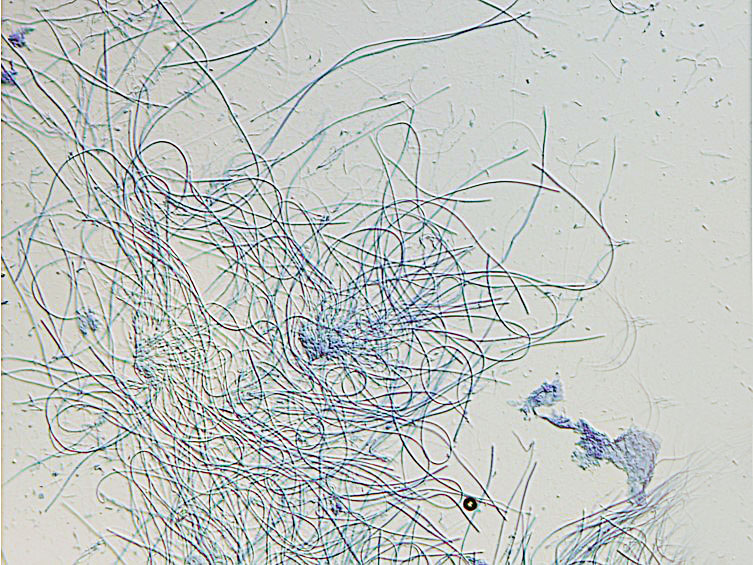
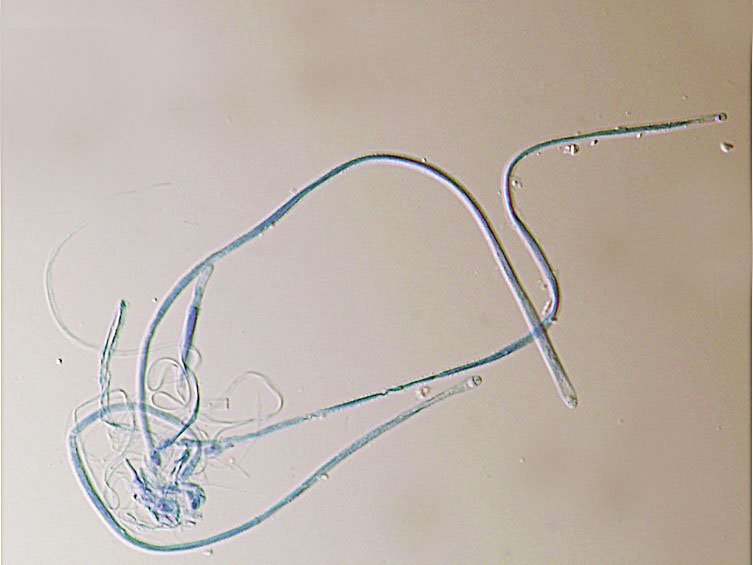
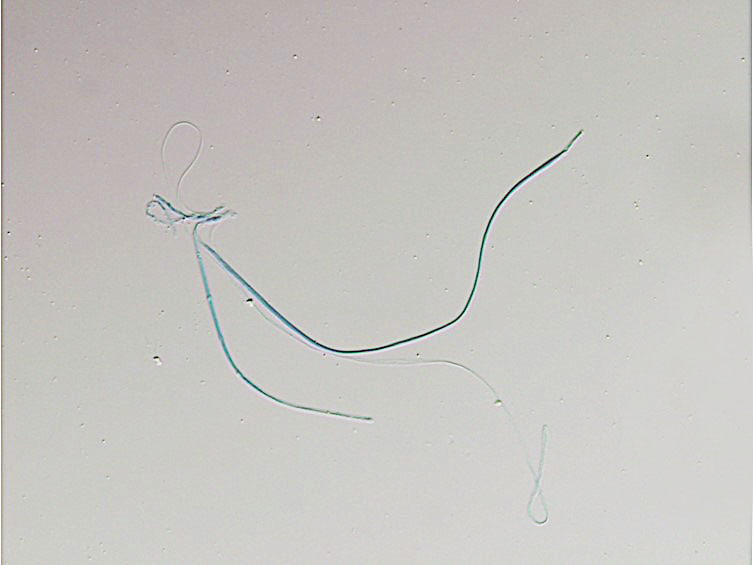
Stromata consisting of dense hyphae, completely covering the host (body size 8 × 5 mm). Perithecia mainly scattered on the abdominal part of the host, dark orange, superficial, narrowly ovoid, 650–680 × 240–330 μm. Asci cylindrical, 8-spored, up to 500 μm long, 2–3 μm wide, apex and bottom of asci thicker than the middle part. Ascospores hyaline, whole, filiform, 300–450 × 1–1.5 μm. Isaria-like asexual morph covering the body of the spider, producing yellowish white mycelium and powdery  conidia, verticillate with
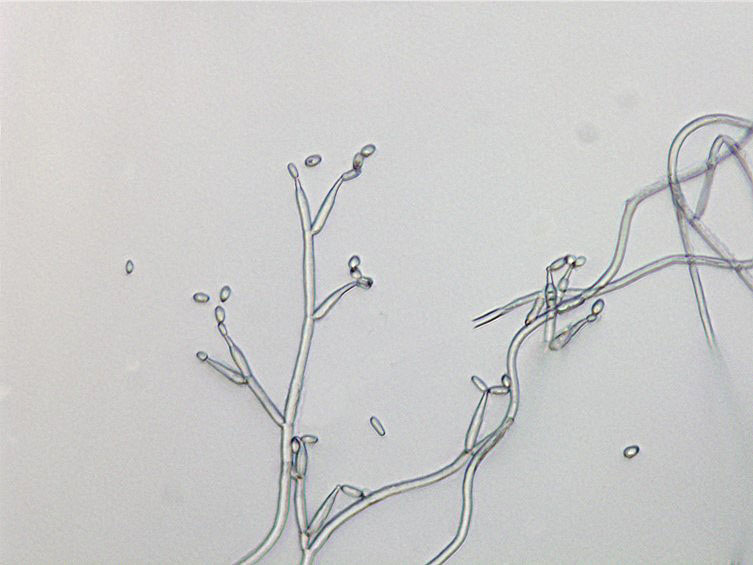
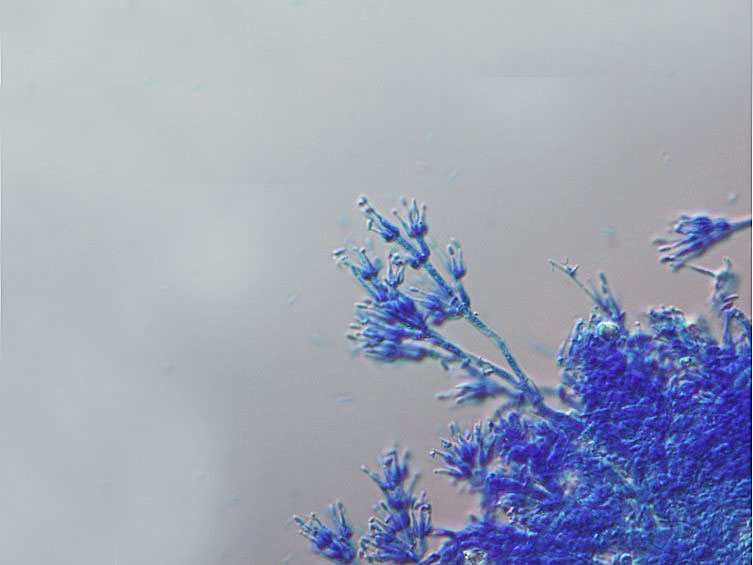
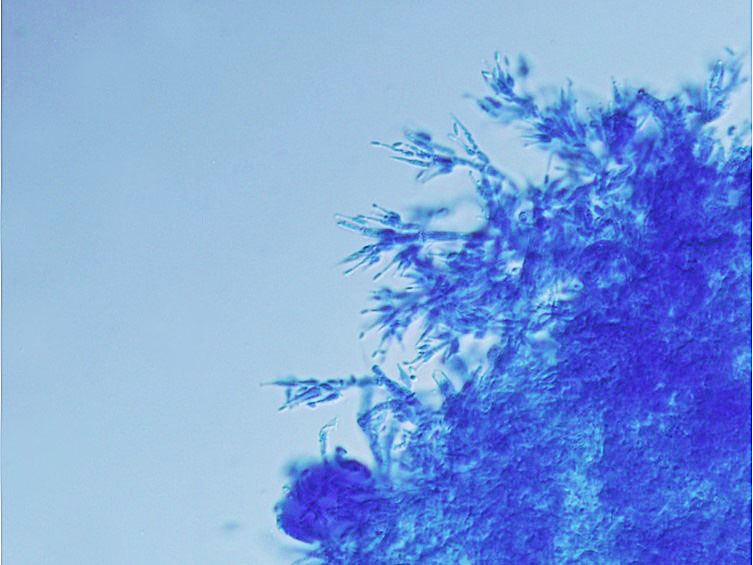
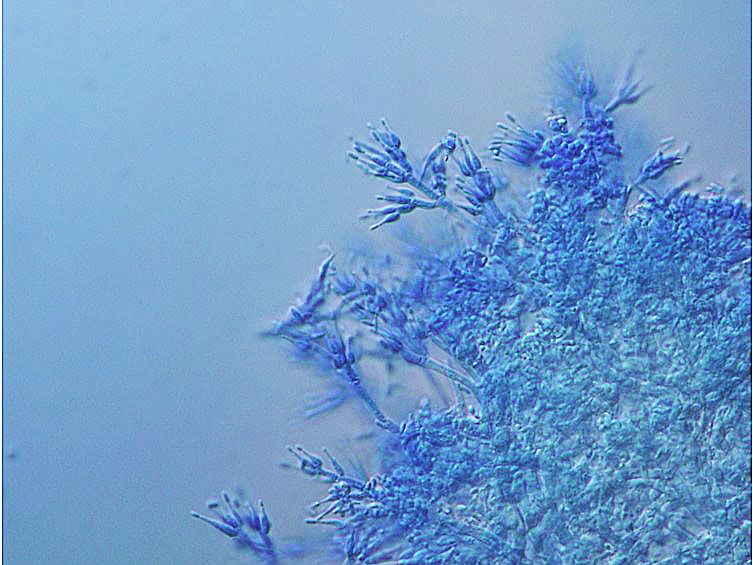
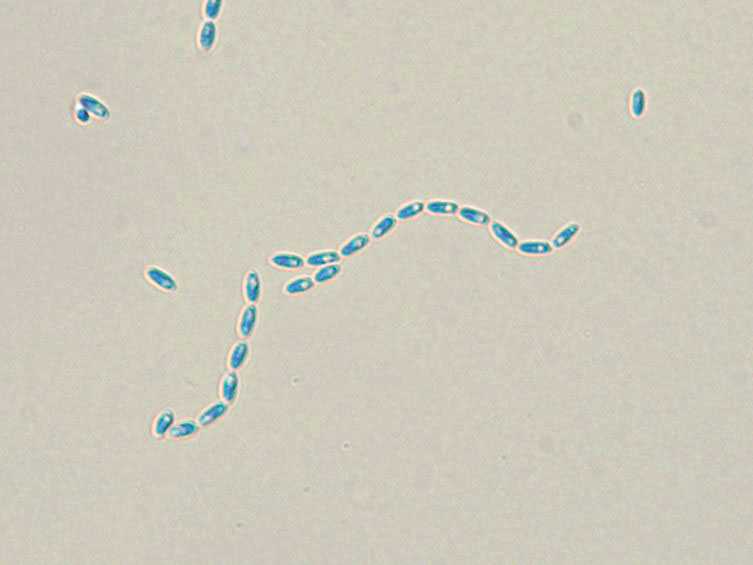
  phialides in whorls of two to five. Phialides 5–12 × 2–2.5 μm, with a cylindrical basal portion, tapering into a thin neck, 1 × 1 μm. Conidia in chains, hyaline, cylindrical to ellipsoidal, 3–5 × 1–2 μm.
Culture characteristics:
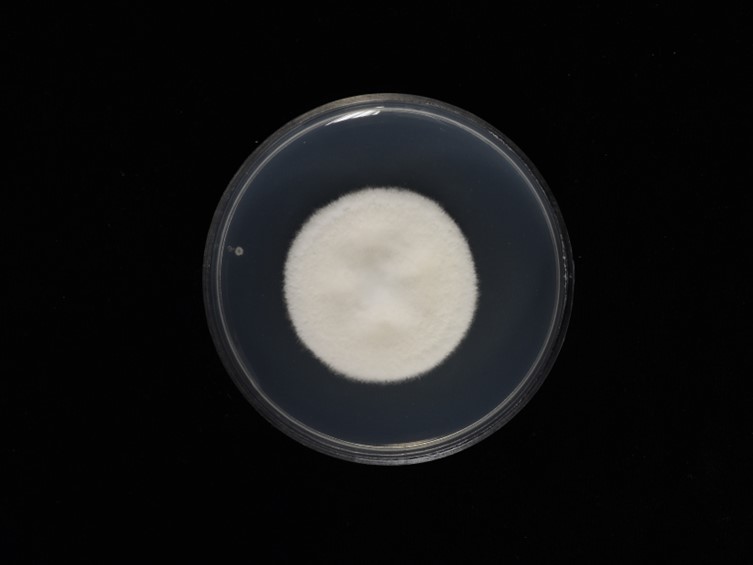
 Colony on PDA moderately fast growing, ca 3 cm diam in 14 d at 25 °C, white to cream, cottony with high mycelial density, reverse pale yellow. Prostrate hyphae smooth, septate, hyaline, 2–2.5 μm diam, Conidial structures consisting of erect conidiophores arising from the aerial hyphae, verticillate with phialides in whorls of two to three. Phialides 10–20 × 2–2.5 μm, with a cylindrical basal portion, tapering into a thin neck, resembling those of Lecanicillium spp., 1 × 0.5 μm. Conidia in chains, hyaline, cylindrical to ellipsoidal, 1-celled, 4–6 × 2–3 μm. Chlamydospores and synnemata not observed.
Reference:
A. Khonsanit, D. Thanakitpipattana, S. Mongkolsamrit, et al. (2024). A phylogenetic assessment of Akanthomyces sensu lato in Cordycipitaceae (Hypocreales, Sordariomycetes): introduction of new genera, and the resurrection of Lecanicillium. Fungal Systematics and Evolution14:271–305.
DOI: https://doi.org/10.3114/fuse.2024.14.17Species |
Strain |
Compound |
Pubchem CID |
Biological activity |
Reference |
|---|
|
Strain |
MF140756 | MF140757 | MF140758 |
|---|---|---|---|
| TBRC 7247 | - | - | - |
| TBRC 7248 | - | - | - |
| TBRC 7249 | - | - | - |